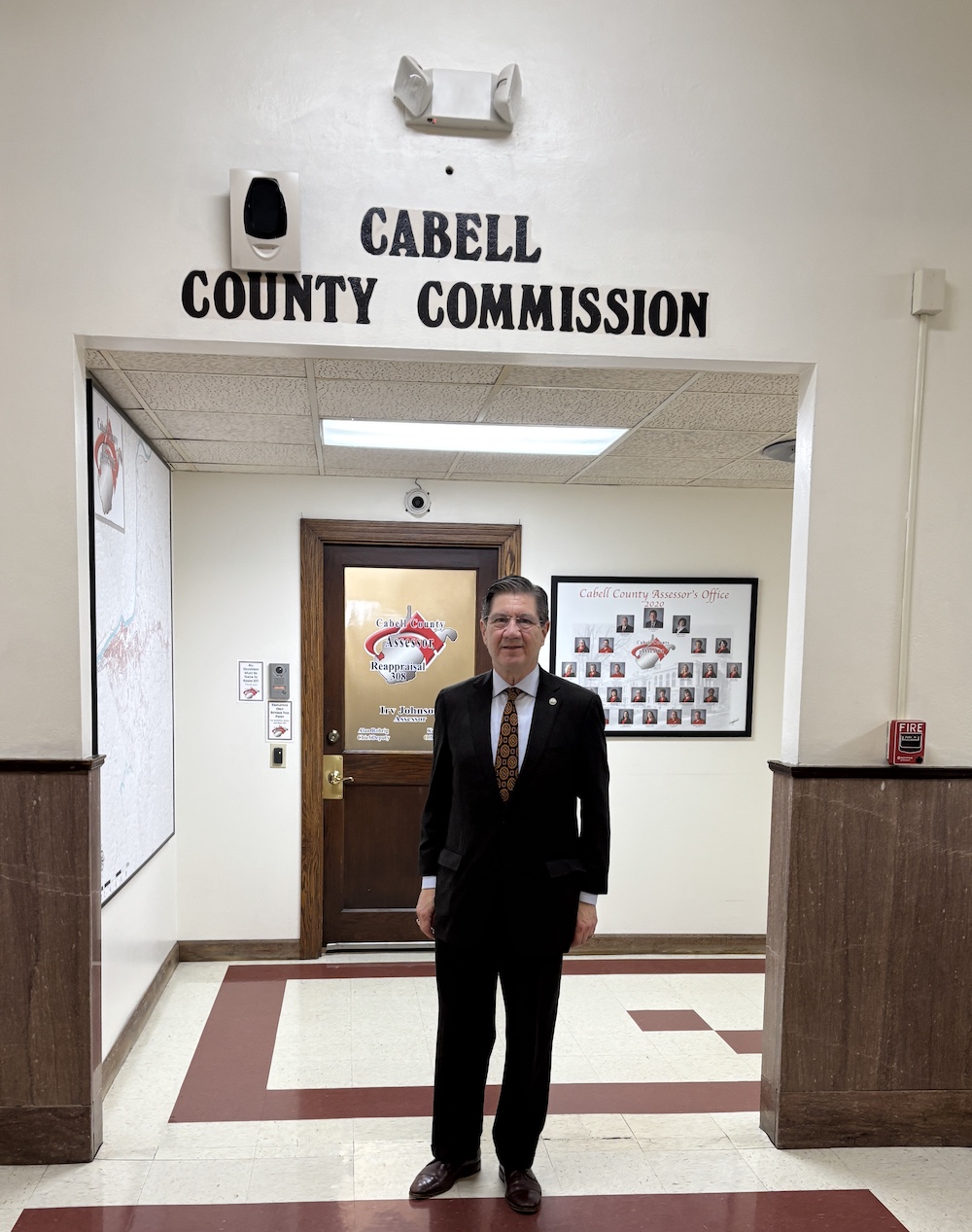
On Nov. 13, WVSOM President James W. Nemitz, Ph.D., met with Cabell County Commissioners Liza Caldwell, Kelli Sobonya, and John Mandt about WVSOM's presence in Cabell County and the region. WVSOM has more than 50 students from or in the area and more than 100 alumni working in that part of West Virginia.
Nemitz said it is essential to tell WVSOM's story and highlight our presence across West Virginia.
Nemitz said it is essential to tell WVSOM's story and highlight our presence across West Virginia.
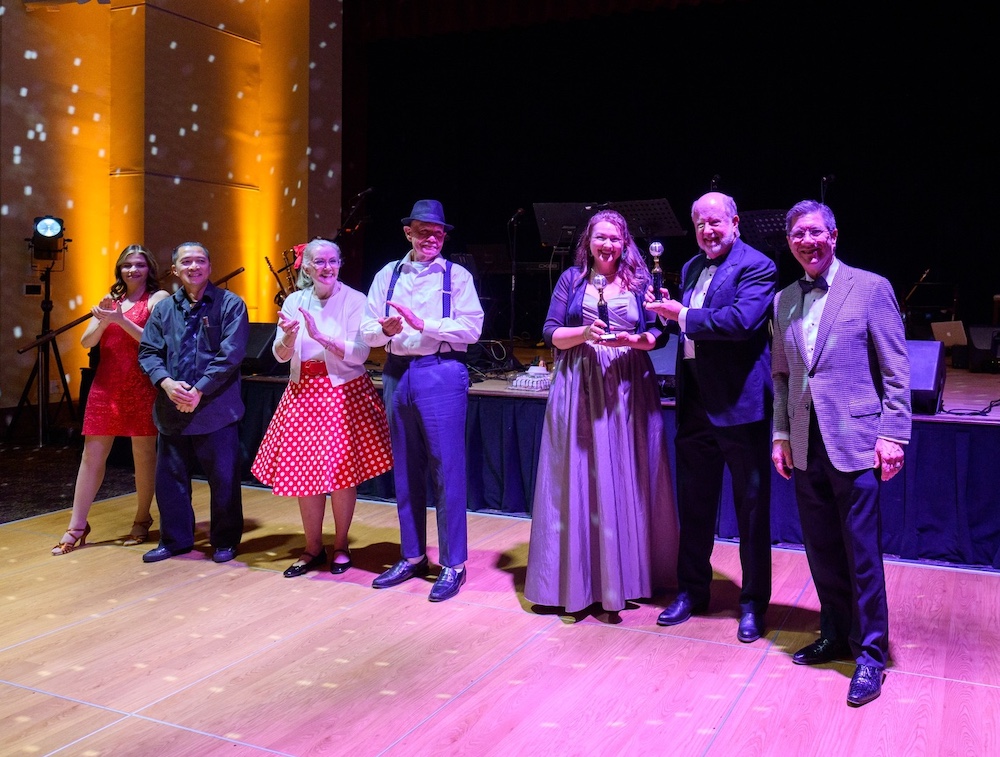
The West Virginia School of Osteopathic Medicine's “Dancing With the D.O.s” fundraiser for student scholarships was Nov. 8 on the school’s Lewisburg campus.
The event celebrated community spirit showcasing the talents of medical professionals outside their usual roles. The evening included dinner, dance performances by Doctors of Osteopathic Medicine and further opportunities to contribute to scholarships.
Couples dancing included Hilary Hamric, D.O., and Mark Waddell, D.O.; Christi Hughart, D.O., and Vinh Nguyen, D.O.; and Karen Steele, D.O., and Tom Steele, D.O.
Thank you to the sponsors who helped make this event a success! Vandalia Health, WVSOM Alumni Association, WVSOM Foundation, AccessHealth, Drs. Jodi Flanders and James Deering, Mason & Barry, Inc, Dr. Art and Missy Rubin, UPMC-GoHealth, Bank of Monroe, Boone Memorial Health, City National Bank, Rainelle Medical Center, United Hospital Center, WVU Medicine Wheeling Hospital, Whit Yates and Jack Carvalho, Bailey & Wyant, Dr. Jim and Nancy Nemitz, Pocahontas Memorial Hospital, WVU Medicine St. Joseph’s Hospital, Gillespie’s Events & Florals, Logan Regional Medical Center, The American Beer Company, The Country Vintner
The event celebrated community spirit showcasing the talents of medical professionals outside their usual roles. The evening included dinner, dance performances by Doctors of Osteopathic Medicine and further opportunities to contribute to scholarships.
Couples dancing included Hilary Hamric, D.O., and Mark Waddell, D.O.; Christi Hughart, D.O., and Vinh Nguyen, D.O.; and Karen Steele, D.O., and Tom Steele, D.O.
Thank you to the sponsors who helped make this event a success! Vandalia Health, WVSOM Alumni Association, WVSOM Foundation, AccessHealth, Drs. Jodi Flanders and James Deering, Mason & Barry, Inc, Dr. Art and Missy Rubin, UPMC-GoHealth, Bank of Monroe, Boone Memorial Health, City National Bank, Rainelle Medical Center, United Hospital Center, WVU Medicine Wheeling Hospital, Whit Yates and Jack Carvalho, Bailey & Wyant, Dr. Jim and Nancy Nemitz, Pocahontas Memorial Hospital, WVU Medicine St. Joseph’s Hospital, Gillespie’s Events & Florals, Logan Regional Medical Center, The American Beer Company, The Country Vintner
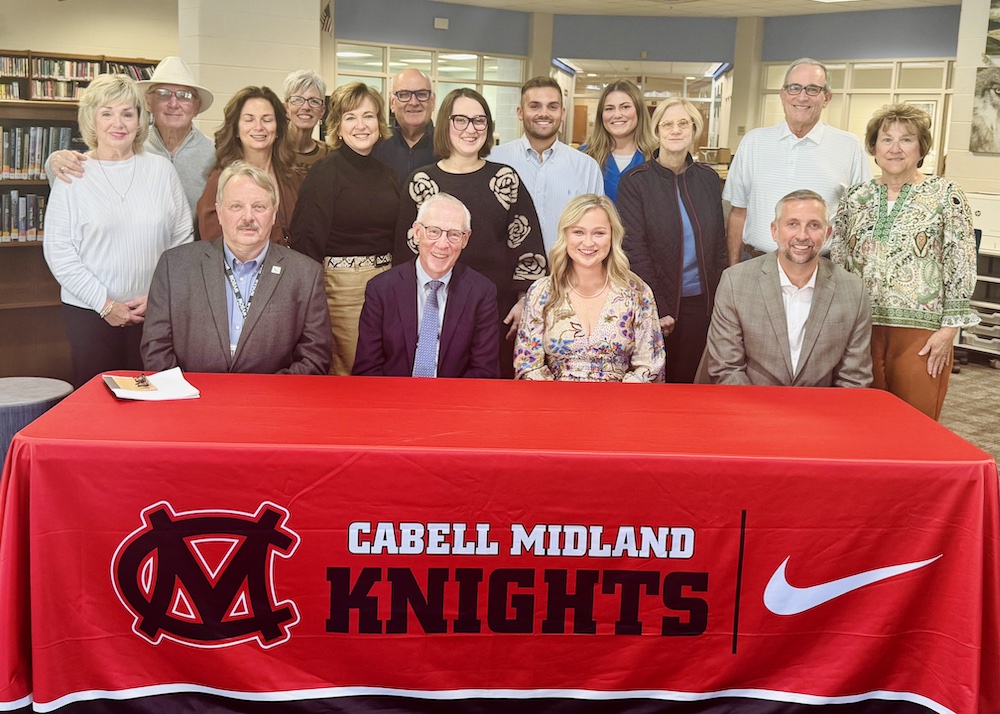
The Health Plan awards full medical school scholarship to WVSOM’s Morgan Christian of Cabell County
Ona, W.Va. — A Barboursville native is attending medical school
at the West Virginia School of Osteopathic Medicine (WVSOM) without
the burden of tuition and fees thanks to a medical scholarship program
offered by The Health Plan (THP).
WVSOM second-year student Morgan Christian has been awarded The
Health Plan Scholarship, which covers tuition and fees for up to four
years, allowing Morgan to graduate medical school without worrying
about those costs.
“4-H taught me to use my head, heart, hands, and health to make a
difference—and that’s exactly what I hope to do as a doctor,” Christian
sad. “I’m so grateful for the mentors who’ve guided me along the way,
and I want every student in West Virginia to know that with hard work
and big dreams, anything is possible.”
Since 2009, The Health Plan has provided more than $3 million in full
scholarships to more than 50 medical and nursing students who attend
West Virginia institutions and intend to practice healthcare in West
Virginia. Christian is one of four students awarded a full medical
scholarship this year.
“Morgan’s commitment to service instilled in her by her involvement in
4-H really impressed our scholarship selection team,” said Jeff Knight,
President and CEO of The Health Plan. “We also appreciate Morgan’s
interest in practicing family medicine – a specialty very much needed
in our rural communities.”
Knight was joined by Don Smith, Associated Vice President Associate
Vice President at WVSOM, Morgan’s family, faculty members at Cabell
Huntington High School and other local leaders to announce the
award.
Smith thanked Knight and The Health Plan for offering the scholarship
program at WVSOM, which educates an average of 800 medical
students each year. According to a report by the West Virginia Higher
Education Policy Commission, the school is No. 1 in producing both
primary care physicians who practice in West Virginia and who practice
in rural areas of the state.
“With this program, The Health Plan is directly impacting the physician
shortage in West Virginia. Medical school is not inexpensive. This
scholarship, by financially assisting recipients who want to stay in West
Virginia, benefits not only our students but the state,” Smith said.
About The Health Plan
The Health Plan is a West Virginia-based nonprofit health maintenance organization that manages and improves the health and well-being of its members. Established in 1979, The Health Plan offers a complete line of managed care products and services designed to provide health care systems and clients with innovative health care benefits and plans at a reasonable cost. Visit THP at healthplan.org.
Ona, W.Va. — A Barboursville native is attending medical school
at the West Virginia School of Osteopathic Medicine (WVSOM) without
the burden of tuition and fees thanks to a medical scholarship program
offered by The Health Plan (THP).
WVSOM second-year student Morgan Christian has been awarded The
Health Plan Scholarship, which covers tuition and fees for up to four
years, allowing Morgan to graduate medical school without worrying
about those costs.
“4-H taught me to use my head, heart, hands, and health to make a
difference—and that’s exactly what I hope to do as a doctor,” Christian
sad. “I’m so grateful for the mentors who’ve guided me along the way,
and I want every student in West Virginia to know that with hard work
and big dreams, anything is possible.”
Since 2009, The Health Plan has provided more than $3 million in full
scholarships to more than 50 medical and nursing students who attend
West Virginia institutions and intend to practice healthcare in West
Virginia. Christian is one of four students awarded a full medical
scholarship this year.
“Morgan’s commitment to service instilled in her by her involvement in
4-H really impressed our scholarship selection team,” said Jeff Knight,
President and CEO of The Health Plan. “We also appreciate Morgan’s
interest in practicing family medicine – a specialty very much needed
in our rural communities.”
Knight was joined by Don Smith, Associated Vice President Associate
Vice President at WVSOM, Morgan’s family, faculty members at Cabell
Huntington High School and other local leaders to announce the
award.
Smith thanked Knight and The Health Plan for offering the scholarship
program at WVSOM, which educates an average of 800 medical
students each year. According to a report by the West Virginia Higher
Education Policy Commission, the school is No. 1 in producing both
primary care physicians who practice in West Virginia and who practice
in rural areas of the state.
“With this program, The Health Plan is directly impacting the physician
shortage in West Virginia. Medical school is not inexpensive. This
scholarship, by financially assisting recipients who want to stay in West
Virginia, benefits not only our students but the state,” Smith said.
About The Health Plan
The Health Plan is a West Virginia-based nonprofit health maintenance organization that manages and improves the health and well-being of its members. Established in 1979, The Health Plan offers a complete line of managed care products and services designed to provide health care systems and clients with innovative health care benefits and plans at a reasonable cost. Visit THP at healthplan.org.

Wonder Women: Jill Cochran, Ph.D., a professor at the West Virginia School of Osteopathic Medicine, at right, joins with Drema Hill, Ph.D., WVSOM’s vice president of community engagement/chief operations officer, and WVSOM President James Nemitz, Ph.D., at the “West Virginia Wonder Women” celebration for 2025. The recognition is awarded by WV Living magazine. Dr. Hill is among the other WVSOM employees who have been named West Virginia Wonder Women. They include Leslie Bicksler, Katherine Calloway, D.O., and Deborah Schmidt, D.O. Several alumnae of the school have also received the honor.
Jill Cochran, Ph.D., a professor at WVSOM among 2025 ‘West Virginia Wonder Women’
Jill Cochran, Ph.D., a professor in the West Virginia School of Osteopathic Medicine’s (WVSOM) Department of Clinical Sciences, is the school’s latest faculty member to receive statewide recognition. She is listed as one of the “West Virginia Wonder Women” for 2025 by WV Living magazine.
Cochran is among the 50 women featured in the publication’s fall issue who have been identified as “living boldly, bringing solutions and championing their families and communities.” WV Living honored the recipients at a West Virginia Wonder Women luncheon on Oct. 29 in South Charleston, W.Va.
Cochran said she is grateful to be selected for the honor.
“It feels unbelievable to be chosen, especially given the women who have previously been cited,” she said. “When I went to nursing school, it was very traditional and we were given nursing capes. I always thought it was fitting, because everyone feels when they’re young that they want to be a superhero and ‘save’ people. We usually outgrow that, but this award makes me feel like that dream is a reality.”
It is the second time Cochran was recognized statewide in the past two years. In 2024, she was inducted into West Virginia Executive magazine’s Health Care Hall of Fame.
Cochran — WVSOM’s only faculty member with a Ph.D. degree in nursing — began working with mothers and their newborns in the late 1970s. She has served as a nurse practitioner at Rainelle Medical Center, inRaleigh General Hospital’s emergency department and, for more than 20 years, as a family nurse practitioner at Lewisburg’s Robert C. Byrd Clinic. She continues to fill in at the clinic as needed and maintains involvement in research, all while operating a pediatric practice at Pocahontas Memorial Rural Health Clinic in Buckeye, W.Va.
A member of WVSOM’s clinical sciences faculty since 2010, Cochran said her background allows her to bring a unique point of view to educating medical students.
“In many ways, the pursuit of excellence is universal among all health care disciplines. However, through the lens of nursing, I hope I bring a different perspective, looking at the impact of illness on the patient, their family and the community,” she said.
Christopher Wood, D.O., chair of WVSOM’s Department of Clinical Sciences, praised Cochran for being a valuable resource to the department.
“Dr. Cochran has been an educator for as long as I have known her,” Wood said. “In educating patients and families, medical students, and her colleagues, she brings a fun and enlightening aspect to every situation. I seek her advice often because of her knowledge and experience, particularly in research.”
Cochran earned bachelor’s, master’s and Ph.D. degrees from the West Virginia University School of Nursing, and is licensed in the state as an advanced practice nurse practitioner. In addition to a number of nursing positions in West Virginia and Virginia, she worked as a registered nurse in various hospitals and home health facilities before joining the Robert C. Byrd Clinic and, later, WVSOM.
In her role at the school, she has received the President’s Outstanding Faculty Award and Outstanding Employee Award. In 2015 she was selected as a finalist for the state’s Professor of the Year award by the Faculty Merit Foundation of West Virginia.
In 2018, Cochran became a fellow of the American Academy of Nurse Practitioners.
She has been involved in translational research focused on diabetes, childhood obesity and the health care needs of children in rural Appalachia. As a WVSOM faculty member, she also has conducted clinically based research. One program implemented as a result of her research was the “telesoothe” program, utilizing an infant simulator to demonstrate swaddling to family members.
Cochran credited WVSOM with giving her the chance to achieve her career goals.
“WVSOM has played an integral role in my professional and personal development,” she said. “I’ve been allowed the opportunity to pursue my research interests, pursue community development and bring my health care perspective to the educational arena.”
She said she especially enjoys helping medical students advance their knowledge through practical learning.
“Some of the most rewarding parts of my work involve seeing students have a ‘lightbulb moment’ when they have mastered a concept — watching them learn hands-on skills like how to do assessments, listen to heart sounds or examine ears. It’s also rewarding to be among faculty who help develop the curriculum for the next generation of D.O.s,” she said.
Other WVSOM employees who have been named past West Virginia Wonder Women include Leslie Bicksler, Katherine Calloway, D.O., Drema Hill, Ph.D., and Deborah Schmidt, D.O. Several alumnae of the school have also received the honor.
Jill Cochran, Ph.D., a professor in the West Virginia School of Osteopathic Medicine’s (WVSOM) Department of Clinical Sciences, is the school’s latest faculty member to receive statewide recognition. She is listed as one of the “West Virginia Wonder Women” for 2025 by WV Living magazine.
Cochran is among the 50 women featured in the publication’s fall issue who have been identified as “living boldly, bringing solutions and championing their families and communities.” WV Living honored the recipients at a West Virginia Wonder Women luncheon on Oct. 29 in South Charleston, W.Va.
Cochran said she is grateful to be selected for the honor.
“It feels unbelievable to be chosen, especially given the women who have previously been cited,” she said. “When I went to nursing school, it was very traditional and we were given nursing capes. I always thought it was fitting, because everyone feels when they’re young that they want to be a superhero and ‘save’ people. We usually outgrow that, but this award makes me feel like that dream is a reality.”
It is the second time Cochran was recognized statewide in the past two years. In 2024, she was inducted into West Virginia Executive magazine’s Health Care Hall of Fame.
Cochran — WVSOM’s only faculty member with a Ph.D. degree in nursing — began working with mothers and their newborns in the late 1970s. She has served as a nurse practitioner at Rainelle Medical Center, inRaleigh General Hospital’s emergency department and, for more than 20 years, as a family nurse practitioner at Lewisburg’s Robert C. Byrd Clinic. She continues to fill in at the clinic as needed and maintains involvement in research, all while operating a pediatric practice at Pocahontas Memorial Rural Health Clinic in Buckeye, W.Va.
A member of WVSOM’s clinical sciences faculty since 2010, Cochran said her background allows her to bring a unique point of view to educating medical students.
“In many ways, the pursuit of excellence is universal among all health care disciplines. However, through the lens of nursing, I hope I bring a different perspective, looking at the impact of illness on the patient, their family and the community,” she said.
Christopher Wood, D.O., chair of WVSOM’s Department of Clinical Sciences, praised Cochran for being a valuable resource to the department.
“Dr. Cochran has been an educator for as long as I have known her,” Wood said. “In educating patients and families, medical students, and her colleagues, she brings a fun and enlightening aspect to every situation. I seek her advice often because of her knowledge and experience, particularly in research.”
Cochran earned bachelor’s, master’s and Ph.D. degrees from the West Virginia University School of Nursing, and is licensed in the state as an advanced practice nurse practitioner. In addition to a number of nursing positions in West Virginia and Virginia, she worked as a registered nurse in various hospitals and home health facilities before joining the Robert C. Byrd Clinic and, later, WVSOM.
In her role at the school, she has received the President’s Outstanding Faculty Award and Outstanding Employee Award. In 2015 she was selected as a finalist for the state’s Professor of the Year award by the Faculty Merit Foundation of West Virginia.
In 2018, Cochran became a fellow of the American Academy of Nurse Practitioners.
She has been involved in translational research focused on diabetes, childhood obesity and the health care needs of children in rural Appalachia. As a WVSOM faculty member, she also has conducted clinically based research. One program implemented as a result of her research was the “telesoothe” program, utilizing an infant simulator to demonstrate swaddling to family members.
Cochran credited WVSOM with giving her the chance to achieve her career goals.
“WVSOM has played an integral role in my professional and personal development,” she said. “I’ve been allowed the opportunity to pursue my research interests, pursue community development and bring my health care perspective to the educational arena.”
She said she especially enjoys helping medical students advance their knowledge through practical learning.
“Some of the most rewarding parts of my work involve seeing students have a ‘lightbulb moment’ when they have mastered a concept — watching them learn hands-on skills like how to do assessments, listen to heart sounds or examine ears. It’s also rewarding to be among faculty who help develop the curriculum for the next generation of D.O.s,” she said.
Other WVSOM employees who have been named past West Virginia Wonder Women include Leslie Bicksler, Katherine Calloway, D.O., Drema Hill, Ph.D., and Deborah Schmidt, D.O. Several alumnae of the school have also received the honor.
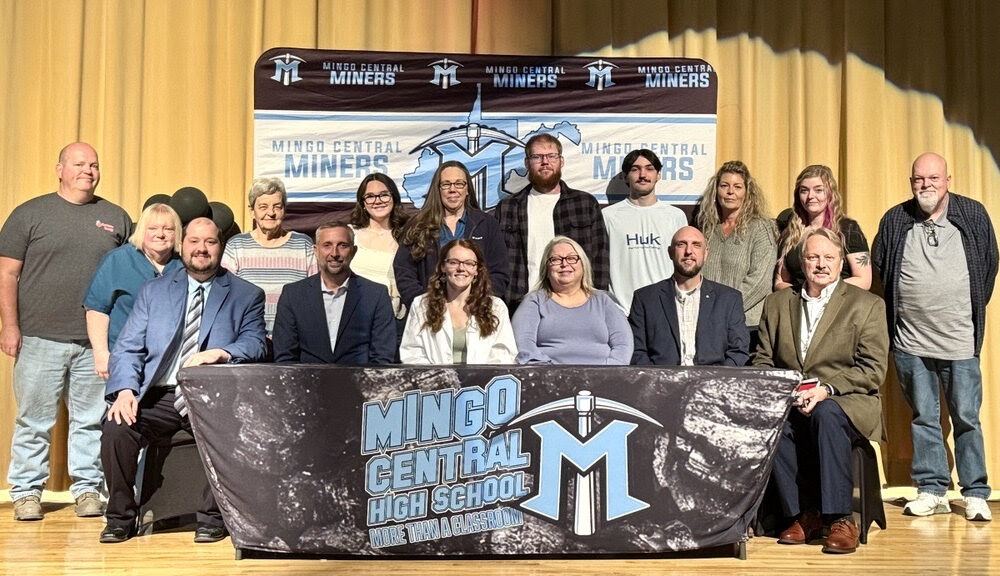
The Health Plan awards Full Medical School Scholarship to WVSOM's Lenzie Stiltner of Matewan
Seated Left to Right: Principal Brandon Cline; Jeff Knight, President & CEO of The Health Plan,
Scholarship Winner Lenzie Stiltner; English Teacher Elizabeth Cline; Delegate Mark Dean,
Director of CTE; Don Smith, Associate Vice President of Government and
External Relations, WV School of Osteopathic Medicine
A Matewan native is attending medical school at the West Virginia School of Osteopathic Medicine (WVSOM) without the burden of tuition and fees thanks to a medical scholarship program offered by The Health Plan (THP).
WVSOM first-year student Lenzie Stiltner has been awarded The Health Plan Scholarship, which covers tuition and fees and is renewable for four years, allowing Lenzie to graduate medical school without worrying about those costs.
“I am truly grateful to The Health Plan for awarding me this scholarship, which allows me to pursue my lifelong dream of becoming a physician,” Stiltner said. “Growing up in Matewan I was shaped by a community that instilled in me the values of resilience, compassion, and service. My goal is to return home after my training to practice rural medicine, giving back to the community that raised me and working to improve access to quality healthcare within our region.”
Since 2009, The Health Plan has provided more than $3 million in full scholarships to more than 50 medical and nursing students who attend West Virginia institutions and intend to practice healthcare in West Virginia. Stiltner is one of four students awarded a full medical scholarship this year.
“Our team was really taken with Lenzie’s pride in her hometown of Matewan and her passion for improving healthcare access in rural West Virginia,” said Jeff Knight, President and CEO of The Health Plan. “We anticipate great things from Lenzie and know her hard work, compassion and love for Mingo County will serve our state well.”
James W. Nemitz, Ph.D., president of WVSOM, congratulated Lenzie.
Nemitz thanked Knight and The Health Plan for offering the scholarship program at WVSOM, which educates an average of 800 medical students each year. According to a report by the West Virginia Higher Education Policy Commission, the school is No. 1 in producing both primary care physicians who practice in West Virginia and who practice in rural areas of the state.
“With this program, The Health Plan is directly impacting the physician shortage in West Virginia. WVSOM is appreciative that The Health Plan includes osteopathic medical students in its scholarship program. Medical school is not inexpensive. This scholarship, by financially assisting recipients who want to stay in West Virginia, benefits not only our students but the state,” Nemitz said.
Lenzie’s family, several members of the faculty at Mingo Central High School and other local leaders attended the announcement. Associate Vice President for Government and External Relations Don Smith represented WVSOM.
Seated Left to Right: Principal Brandon Cline; Jeff Knight, President & CEO of The Health Plan,
Scholarship Winner Lenzie Stiltner; English Teacher Elizabeth Cline; Delegate Mark Dean,
Director of CTE; Don Smith, Associate Vice President of Government and
External Relations, WV School of Osteopathic Medicine
A Matewan native is attending medical school at the West Virginia School of Osteopathic Medicine (WVSOM) without the burden of tuition and fees thanks to a medical scholarship program offered by The Health Plan (THP).
WVSOM first-year student Lenzie Stiltner has been awarded The Health Plan Scholarship, which covers tuition and fees and is renewable for four years, allowing Lenzie to graduate medical school without worrying about those costs.
“I am truly grateful to The Health Plan for awarding me this scholarship, which allows me to pursue my lifelong dream of becoming a physician,” Stiltner said. “Growing up in Matewan I was shaped by a community that instilled in me the values of resilience, compassion, and service. My goal is to return home after my training to practice rural medicine, giving back to the community that raised me and working to improve access to quality healthcare within our region.”
Since 2009, The Health Plan has provided more than $3 million in full scholarships to more than 50 medical and nursing students who attend West Virginia institutions and intend to practice healthcare in West Virginia. Stiltner is one of four students awarded a full medical scholarship this year.
“Our team was really taken with Lenzie’s pride in her hometown of Matewan and her passion for improving healthcare access in rural West Virginia,” said Jeff Knight, President and CEO of The Health Plan. “We anticipate great things from Lenzie and know her hard work, compassion and love for Mingo County will serve our state well.”
James W. Nemitz, Ph.D., president of WVSOM, congratulated Lenzie.
Nemitz thanked Knight and The Health Plan for offering the scholarship program at WVSOM, which educates an average of 800 medical students each year. According to a report by the West Virginia Higher Education Policy Commission, the school is No. 1 in producing both primary care physicians who practice in West Virginia and who practice in rural areas of the state.
“With this program, The Health Plan is directly impacting the physician shortage in West Virginia. WVSOM is appreciative that The Health Plan includes osteopathic medical students in its scholarship program. Medical school is not inexpensive. This scholarship, by financially assisting recipients who want to stay in West Virginia, benefits not only our students but the state,” Nemitz said.
Lenzie’s family, several members of the faculty at Mingo Central High School and other local leaders attended the announcement. Associate Vice President for Government and External Relations Don Smith represented WVSOM.
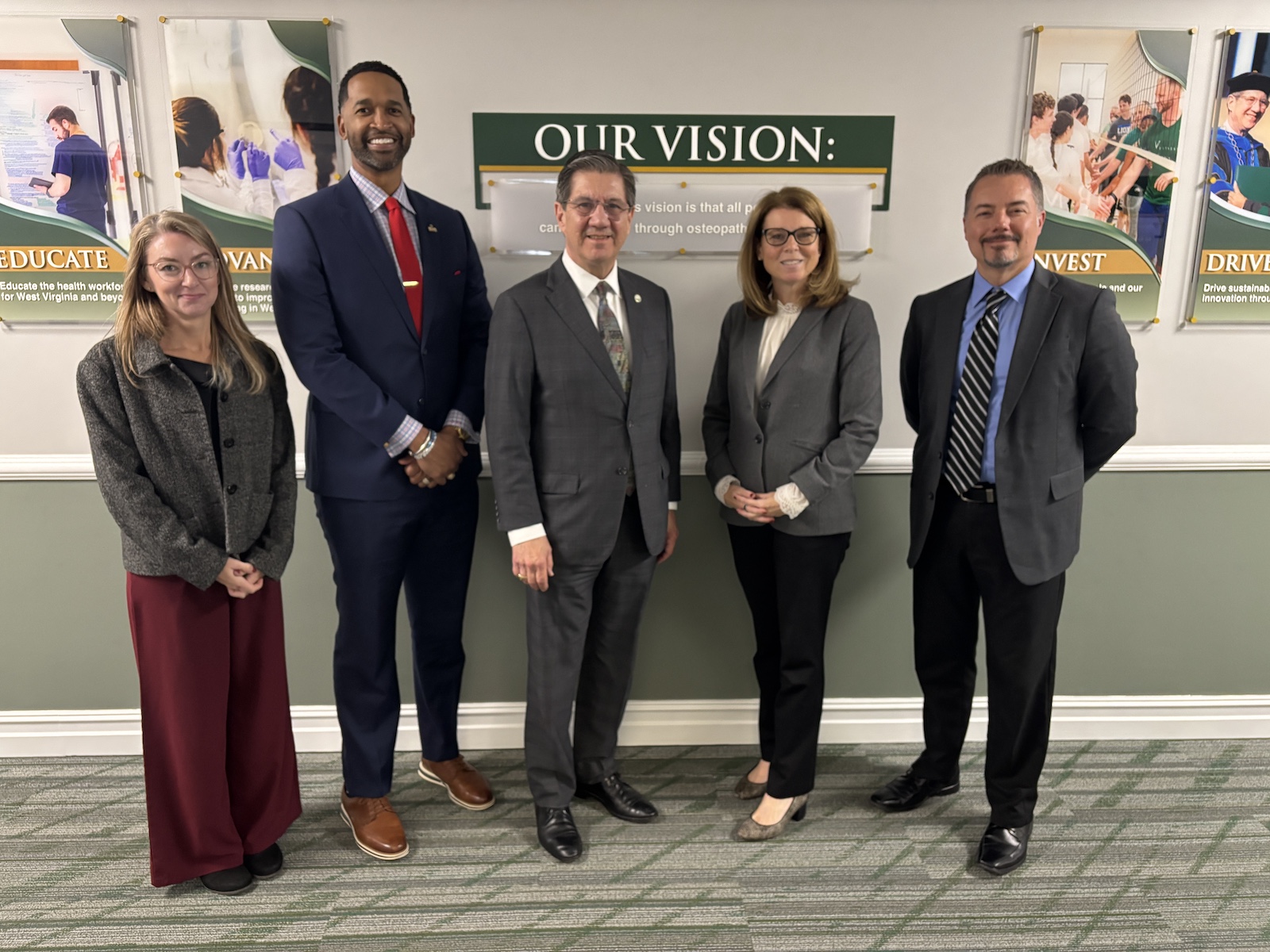
The West Virginia School of Osteopathic Medicine hosted Concord University President Bethany Meighen and her team — Dr. Amanda Sauchuck, Associate Provost; Dr. Michael Bean, Associate Professor of Education; and Andrew Sulgit, Chief Grants & Government Relations Officer — on the WVSOM in Lewisburg on Oct. 16.
During the meeting, President James Nemitz was joined by Gail Swarm, Assistant Dean of Clinical Sciences; Brian Griffith, Professor, Department of Biomedical Sciences; Matthew Williams, Associate Professor, Department of Biomedical Sciences; Ronnie Collins, Executive Director of Enrollment; and Don Smith, Associate Vice President of Government and External Relations.
WVSOM and Concord have a strong working relationship and the meeting allowed the sharing of ideas.
During the meeting, President James Nemitz was joined by Gail Swarm, Assistant Dean of Clinical Sciences; Brian Griffith, Professor, Department of Biomedical Sciences; Matthew Williams, Associate Professor, Department of Biomedical Sciences; Ronnie Collins, Executive Director of Enrollment; and Don Smith, Associate Vice President of Government and External Relations.
WVSOM and Concord have a strong working relationship and the meeting allowed the sharing of ideas.
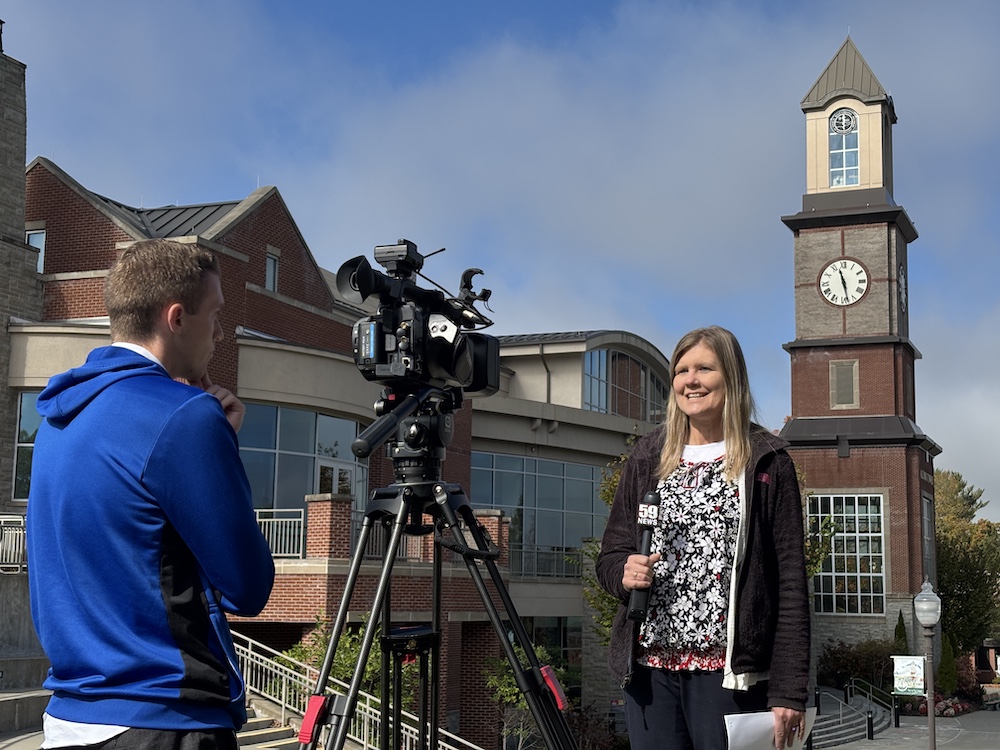
Machelle Linsenmeyer, Ed.D., West Virginia School of Osteopathic Medicine's (WVSOM) assistant vice president of institutional effectiveness and academic resources and the chair of the school's AI Task Force, talks with Caleb Oaks of 59 News WVNS TV about the Task Force. Linsenmeyer also participates in the AI Advisory Workgroup with the American Association of Colleges of Osteopathic Medicine (AACOM), an organization that supports all U.S. osteopathic medical schools.
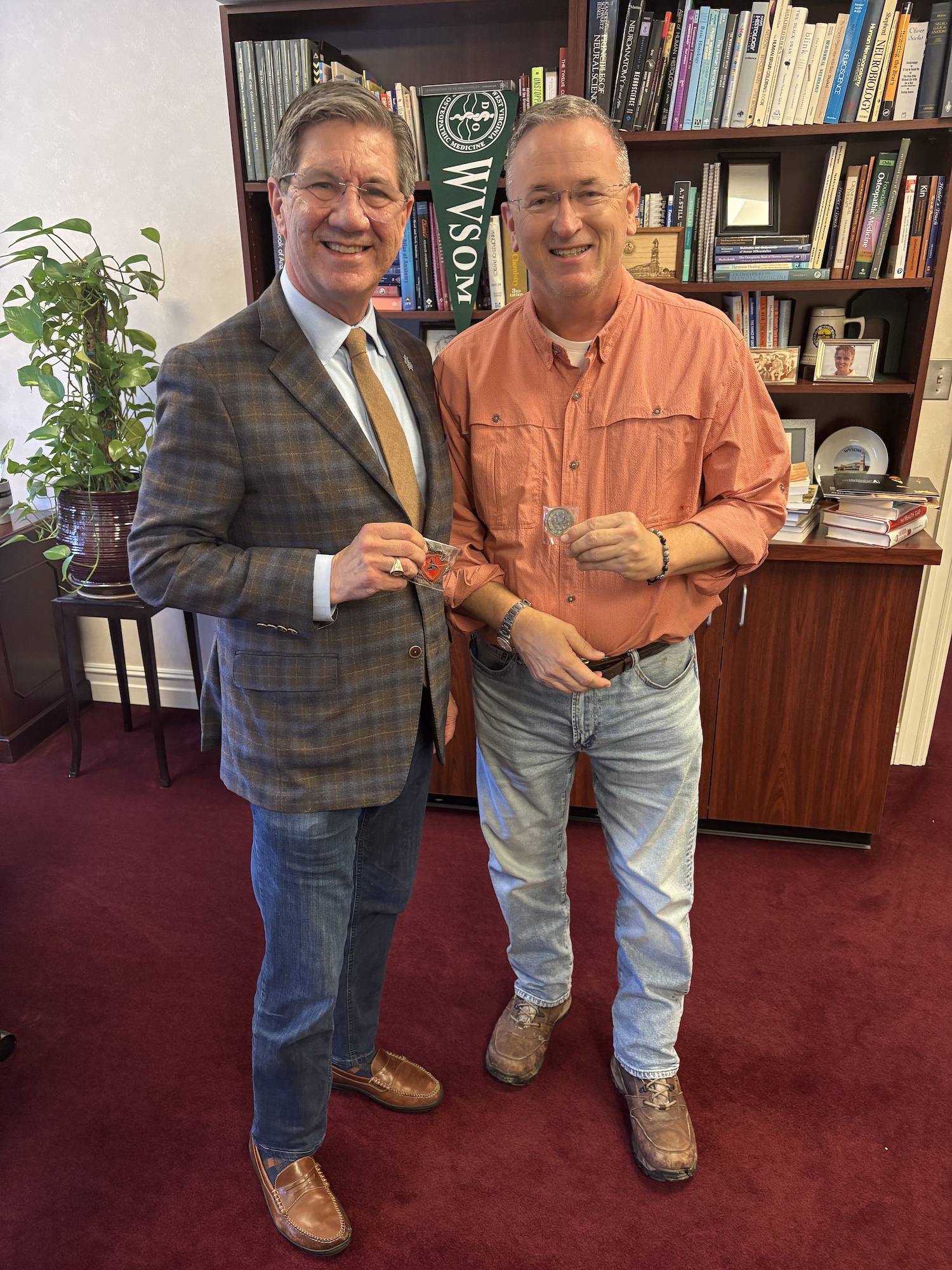
Rod Doss, D.O., WVSOM Class of 2003, and a member of the United States Navy, presents WVSOM President Jim Nemtiz with a U.S. Military Challenge Coin.