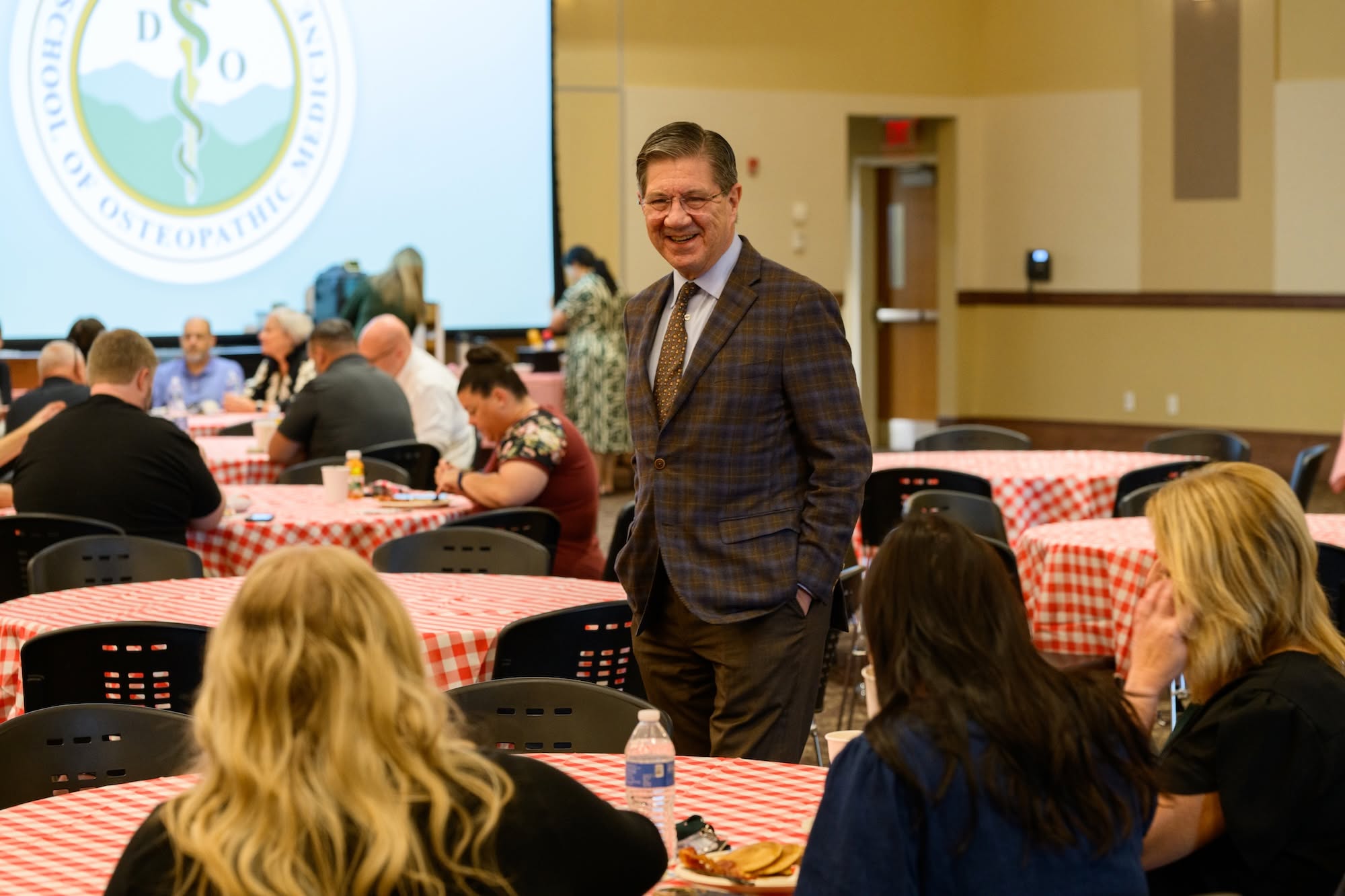
Joining faculty and staff at the announcement that WVSOM was recognized for the 11th time as a Great College to Work For in The Chronicle of Higher Education’s annual report on academic workplaces, James W. Nemitz, Ph.D., WVSOM’s president, talks with guests at celebration breakfast.
Nemitz is the school’s longest-serving employee, with 40 years of service. He was is pleased that the school is known as an institution where people find their work to be satisfying.
“What makes this recognition especially meaningful is that it comes from our employees,” he said. “When our people tell The Chronicle of Higher Education that WVSOM is a great place to work, it lets us know we’ve created an environment where they feel productive and have opportunities to grow. I believe that maintaining a workplace where talented people want to build careers is an essential part of educating tomorrow’s physicians.”
WVSOM has a history of employee longevity. The school currently has 313 employees, with 137 (44%) having served the institution for at least 10 years, 37 (12%) for at least 20 years and 10 (3%) for at least 30 years.
Leslie Bicksler, the school’s chief human resources officer, said WVSOM has fostered a sense of connectedness and collaboration among those who work to make the school a leader in medical education.
“WVSOM has some of the best employees anywhere,” Bicksler said. “Our faculty and staff care deeply about our students, our mission and one another. They bring creativity, dedication and a willingness to work together that makes WVSOM a special place. Being recognized again as a Great College to Work For reflects the culture they have created and sustained. It is a place where people are valued, supported and empowered to make a difference every day.”
Nemitz is the school’s longest-serving employee, with 40 years of service. He was is pleased that the school is known as an institution where people find their work to be satisfying.
“What makes this recognition especially meaningful is that it comes from our employees,” he said. “When our people tell The Chronicle of Higher Education that WVSOM is a great place to work, it lets us know we’ve created an environment where they feel productive and have opportunities to grow. I believe that maintaining a workplace where talented people want to build careers is an essential part of educating tomorrow’s physicians.”
WVSOM has a history of employee longevity. The school currently has 313 employees, with 137 (44%) having served the institution for at least 10 years, 37 (12%) for at least 20 years and 10 (3%) for at least 30 years.
Leslie Bicksler, the school’s chief human resources officer, said WVSOM has fostered a sense of connectedness and collaboration among those who work to make the school a leader in medical education.
“WVSOM has some of the best employees anywhere,” Bicksler said. “Our faculty and staff care deeply about our students, our mission and one another. They bring creativity, dedication and a willingness to work together that makes WVSOM a special place. Being recognized again as a Great College to Work For reflects the culture they have created and sustained. It is a place where people are valued, supported and empowered to make a difference every day.”
e West Virginia School of Osteopathic Medicine (WVSOM) was recognized for the 11th time as a Great College to Work For in The Chronicle of Higher Education’s annual report on academic workplaces.
The 2026 report recognizes WVSOM in five categories: job satisfaction and support; compensation and benefits; professional and career development programs; mission and pride; and faculty experience.
WVSOM is also included on the publication’s Honor Roll for the ninth time, a distinction awarded to institutions that are cited most often across all categories.
Of the 171 institutions participating in the 2026 Great Colleges to Work For survey, 76 received recognition and 42 received Honor Roll distinction. The survey, administered by ModernThink, an organizational development and management consulting firm, asked faculty and staff of WVSOM and other higher education institutions to evaluate their workplace through a series of questions.
The 2026 report recognizes WVSOM in five categories: job satisfaction and support; compensation and benefits; professional and career development programs; mission and pride; and faculty experience.
WVSOM is also included on the publication’s Honor Roll for the ninth time, a distinction awarded to institutions that are cited most often across all categories.
Of the 171 institutions participating in the 2026 Great Colleges to Work For survey, 76 received recognition and 42 received Honor Roll distinction. The survey, administered by ModernThink, an organizational development and management consulting firm, asked faculty and staff of WVSOM and other higher education institutions to evaluate their workplace through a series of questions.
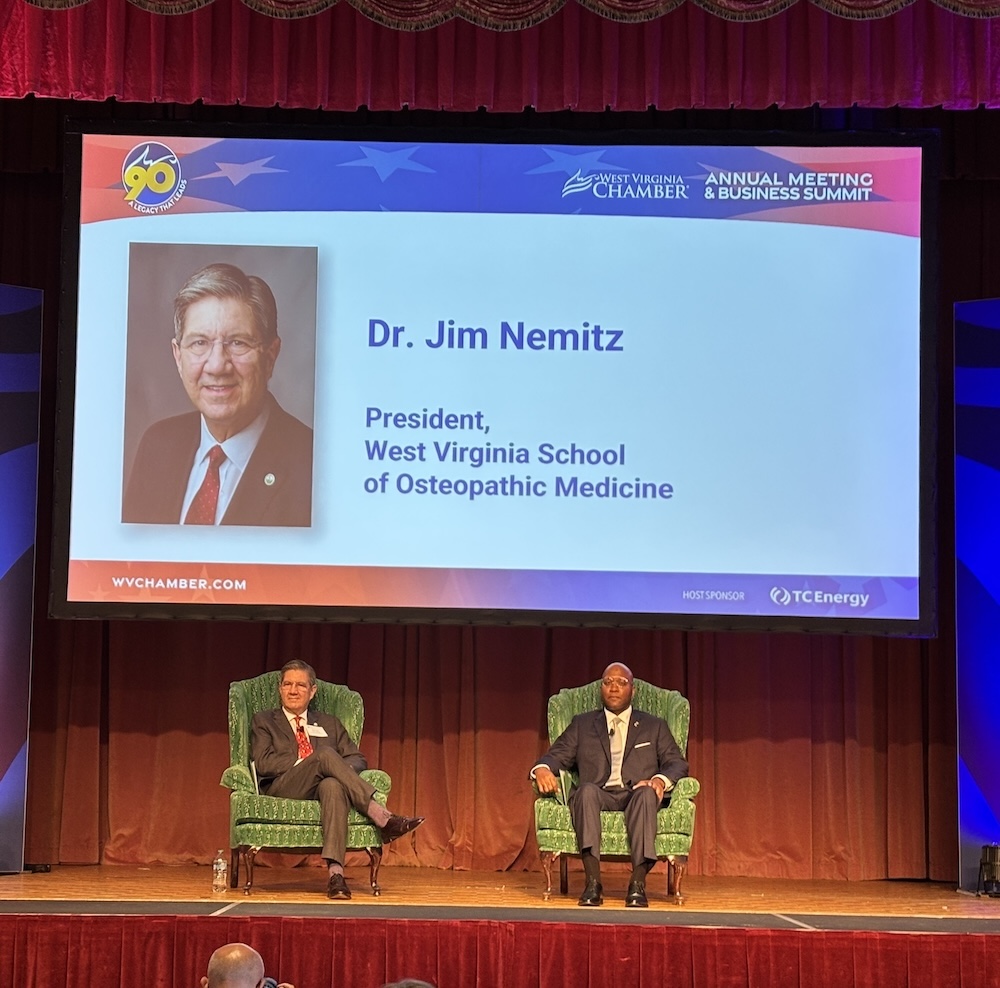
WVSOM President James Nemitz spoke at the 90th annual West Virginia Chamber of Commerce Meeting and Business Summit earlier this morning. He joined West Virginia State University President Ericke Cage for the panel “Educating the Future: Higher Education’s Role in West Virginia’s Growth.”
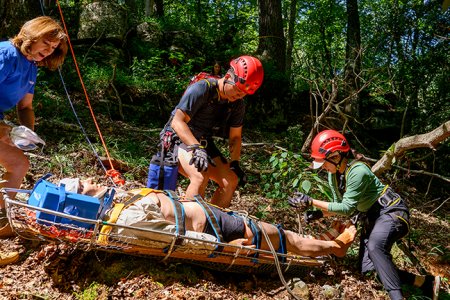
Gear ranging from ropes, harnesses and helmets to splints, tourniquets and rescue stretchers will play a role in immersive rescue exercises during the West Virginia School of Osteopathic Medicine’s (WVSOM) wilderness medicine elective rotation, thanks in part to the Encova Foundation of West Virginia.
The WVSOM Foundation — a charitable organization that supports WVSOM through philanthropic investment — received a $25,000 grant from Encova to help fund the school’s 2026 elective. The two-week course provides training in emergency care, disaster response and patient stabilization in outdoor environments for third- and fourth-year medical students and resident physicians.
The WVSOM Foundation — a charitable organization that supports WVSOM through philanthropic investment — received a $25,000 grant from Encova to help fund the school’s 2026 elective. The two-week course provides training in emergency care, disaster response and patient stabilization in outdoor environments for third- and fourth-year medical students and resident physicians.
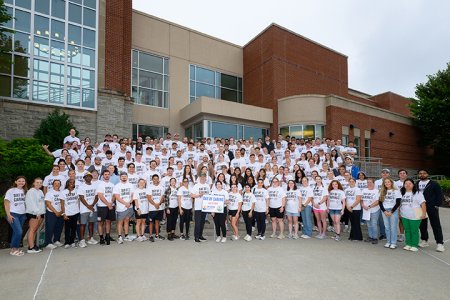
More than 200 WVSOM students volunteer in Greenbrier County for Day of Caring
During the school’s Day of Caring, more than 200 students from WVSOM’s D.O. and MSBS programs, along with 13 faculty and staff members, performed volunteer work at about 30 locations throughout Greenbrier County. Students did yard maintenance, cleaned, painted and completed repair work, among many other activities.
During the school’s Day of Caring, more than 200 students from WVSOM’s D.O. and MSBS programs, along with 13 faculty and staff members, performed volunteer work at about 30 locations throughout Greenbrier County. Students did yard maintenance, cleaned, painted and completed repair work, among many other activities.

During the 2026 West Virginia Economic Development Council's Fall Conference on Sept 16-18 at Snowshoe Mountain Resort,
President James W. Nemitz will lead a discussion on WVSOM's Greenbrier Valley Bio Hub.
Panel: WVSOM: Making the Greenbrier Valley Bio Hub a Reality
Discover ongoing efforts to promote WV School of Osteopathic Medicine (WVSOM), the Greenbrier Valley and West Virginia as a destination for biomedical development.
Speakers:
President James W. Nemitz, WV School of Osteopathic Medicine
Don Smith, WV School of Osteopathic Medicine
Bryan Brown, Bioscience Association of West Virginia
WVSOM appreciates the support of Ruthana McNeel Beezley and the Greenbrier Valley Economic Development Corporation team and board in bringing the conference to the Greenbrier Valley region.
President James W. Nemitz will lead a discussion on WVSOM's Greenbrier Valley Bio Hub.
Panel: WVSOM: Making the Greenbrier Valley Bio Hub a Reality
Discover ongoing efforts to promote WV School of Osteopathic Medicine (WVSOM), the Greenbrier Valley and West Virginia as a destination for biomedical development.
Speakers:
President James W. Nemitz, WV School of Osteopathic Medicine
Don Smith, WV School of Osteopathic Medicine
Bryan Brown, Bioscience Association of West Virginia
WVSOM appreciates the support of Ruthana McNeel Beezley and the Greenbrier Valley Economic Development Corporation team and board in bringing the conference to the Greenbrier Valley region.
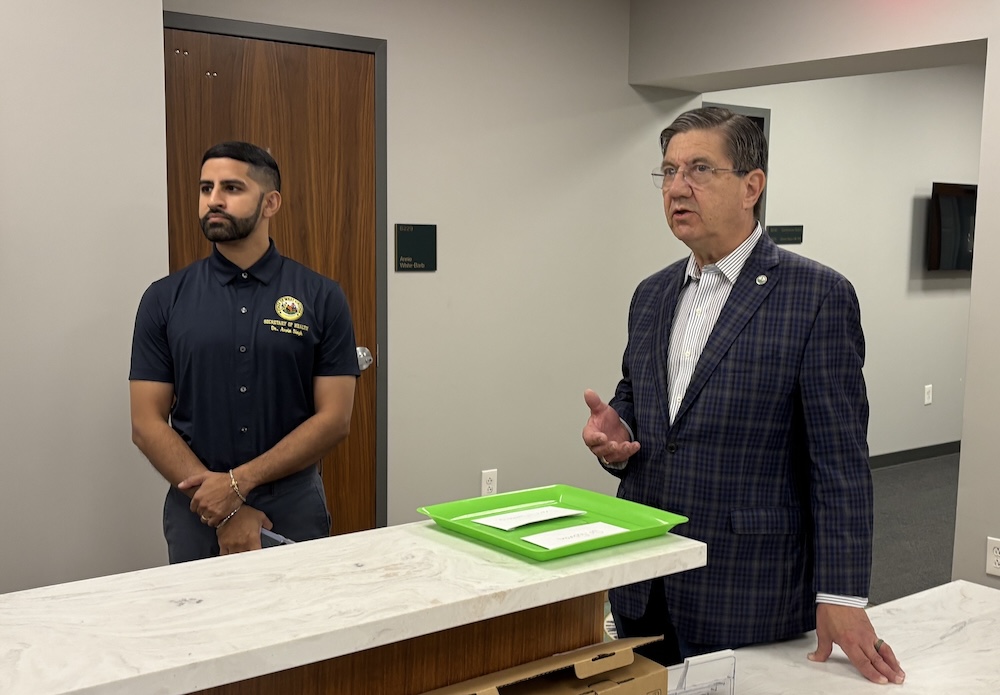
President James Nemitz, Ph.D., welcomes Dr. Arvin Singh, West Virginia's Secretary of Health, to the West Virginia School of Osteopathic Medicine campus in The City of Lewisburg.
Dr. Singh and his family were in Greenbrier County to attend the State Fair of West Virginia, and he took the time to tour our campus and discuss WVSOM's efforts to serve its students and West Virginia residents.
Dr. Singh and his family were in Greenbrier County to attend the State Fair of West Virginia, and he took the time to tour our campus and discuss WVSOM's efforts to serve its students and West Virginia residents.
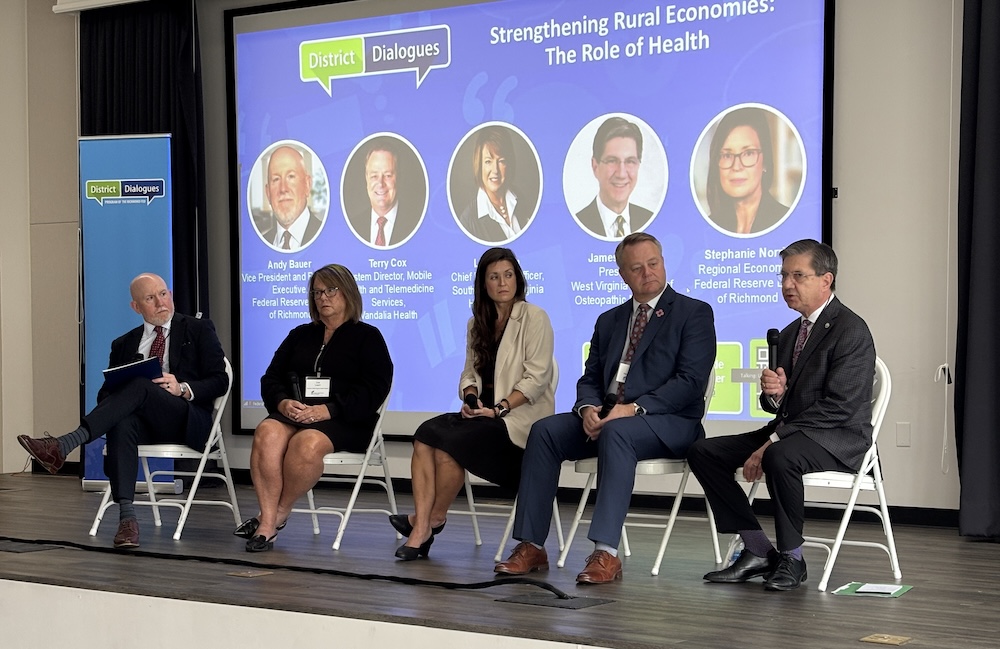
President James W. Nemitz, Ph.D., represented WVSOM and shared the stage with the panelists at Tuesday's District Dialogues “Strengthening Rural Economies: The Role of Health” program.
The panel included:
- Andy Bauer, Vice President and Regional Executive, Federal Reserve Bank of Richmond.
- Terry Cox, System Director, Mobile Health and Telemedicine Services, Vandalia Health CAMC and the West Virginia Rural Health Association.
- Lisa Leach, Chief Executive Officer, Southern West Virginia Health System
- Stephanie Norris, Regional Economist, Federal Reserve Bank of Richmond.
Bauer opened the program by discussing how health challenges, particularly in West Virginia, negatively affect workforce development, economic growth, and the well-being of rural communities.
Despite stormy weather that reduced attendance at the live event at the University of Charleston, those present and on Zoom heard innovative ideas, updates on community partnerships, and a wide range of strategies to improve health outcomes.
It was also clear that the health care industry is a major economic force in West Virginia.
The discussion closed with thoughts on what more the health care community can do to help improve West Virginia.
The Federal Reserve Bank of Richmond (FRBR) held the event in Charleston. The FRBR represents the Fifth Federal Reserve District, which includes North and South Carolina, Virginia, Maryland, Washington, D.C., and most of West Virginia.
WVSOM works with West Virginia Osteopathic Medical Association, American Osteopathic Association, American Association of Colleges of Osteopathic Medicine, West Virginia Hospital Association and many others on health care challenges, government policy issues, and concerns that impact the health care economy in West Virginia.
FRBR representatives travel around the region, listening and learning from individuals, businesses, and community leaders to inform decisions and policies that help the economy grow stronger.
The panel included:
- Andy Bauer, Vice President and Regional Executive, Federal Reserve Bank of Richmond.
- Terry Cox, System Director, Mobile Health and Telemedicine Services, Vandalia Health CAMC and the West Virginia Rural Health Association.
- Lisa Leach, Chief Executive Officer, Southern West Virginia Health System
- Stephanie Norris, Regional Economist, Federal Reserve Bank of Richmond.
Bauer opened the program by discussing how health challenges, particularly in West Virginia, negatively affect workforce development, economic growth, and the well-being of rural communities.
Despite stormy weather that reduced attendance at the live event at the University of Charleston, those present and on Zoom heard innovative ideas, updates on community partnerships, and a wide range of strategies to improve health outcomes.
It was also clear that the health care industry is a major economic force in West Virginia.
The discussion closed with thoughts on what more the health care community can do to help improve West Virginia.
The Federal Reserve Bank of Richmond (FRBR) held the event in Charleston. The FRBR represents the Fifth Federal Reserve District, which includes North and South Carolina, Virginia, Maryland, Washington, D.C., and most of West Virginia.
WVSOM works with West Virginia Osteopathic Medical Association, American Osteopathic Association, American Association of Colleges of Osteopathic Medicine, West Virginia Hospital Association and many others on health care challenges, government policy issues, and concerns that impact the health care economy in West Virginia.
FRBR representatives travel around the region, listening and learning from individuals, businesses, and community leaders to inform decisions and policies that help the economy grow stronger.
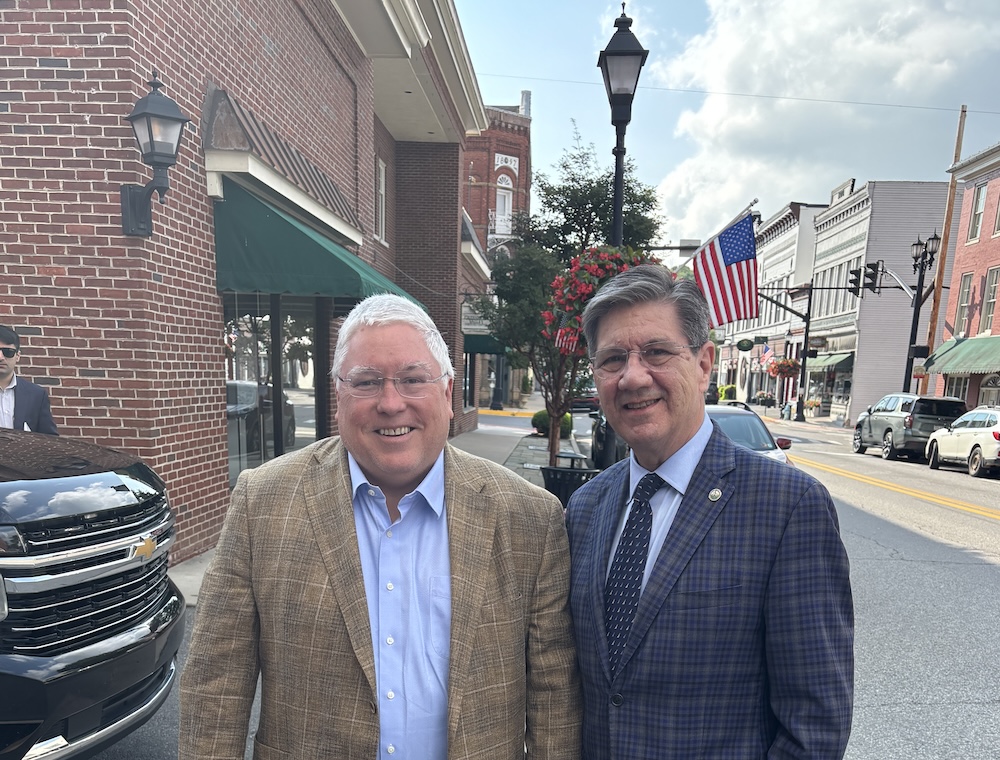
President Nemitz talks with West Virginia Governor Patrick Morrisey during a "Tax-Free Day" event in Lewisburg.