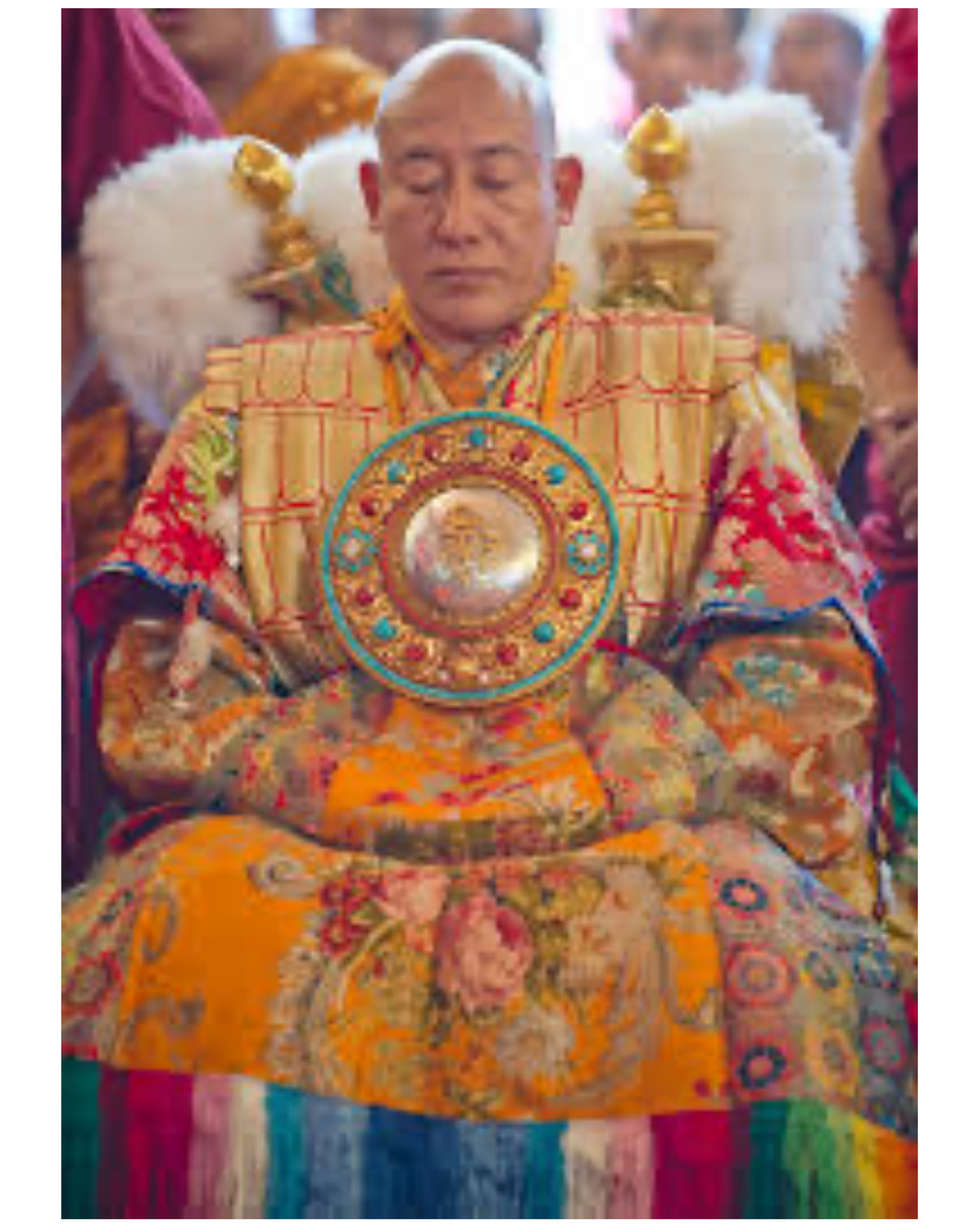
The West Virginia School of Osteopathic Medicine (WVSOM) is hosting The Nechung Oracle, Kuten-la, the official State Oracle of Tibet and spiritual advisor to the Dalai Lama, at a public reception from 5 to 7 p.m., Nov. 19.
“This is a once-in-a-lifetime event. We hope everyone can join us,” said Dawn Roberts, Ed.D., WVSOM’s associate dean of Multicultural and Student Affairs.
The school’s Office of Multicultural and Student Affairs will host the reception in the Conference Center of the WVSOM’s Student Center. The reception is open to the public in addition to WVSOM students, staff and faculty. Refreshments will be provided.
The current Nechung Oracle is the Venerable Thupten Ngodup, who has been in the role since 1988. The Nechung Kuten-la will be accompanied by Lama Tenzin Choegyal and three monks from the Nechung Monastery.
Kuten-la is on a tour of the U.S. His stop in Lewisburg is the result of a visit earlier this year to India by Katherine Calloway, D.O., regional assistant dean for the South Central region of WVSOM’s Statewide Campus. Dr. Calloway is working with Dr. Roberts in coordinating the reception.
In April, Calloway and four others — Megan Kelley and Sarah McQueen, WVSOM Class of 2025 medical students, Caroline LaFleur, M.D., of Medical Diplomats International; and Calloway’s 15-year-old daughter, Grace — visited Dehradun, Uttarakhand and Dharamshala, India, and met with the Dalai Lama.
During the trip to India, Calloway also spoke with Deputy Speaker of Tibetan Parliament Dolma Tsering, Kashag History Documentation Secretary Ngawang Namgyal and Tibetan Department of Health Secretary Jampa Phuntsok.
Calloway said the group also visited a hospital, a center for education, a women’s center and the location of the Tibetan government in exile, including the Dalai Lama’s residence and Tibetan Parliament.
“This is a once-in-a-lifetime event. We hope everyone can join us,” said Dawn Roberts, Ed.D., WVSOM’s associate dean of Multicultural and Student Affairs.
The school’s Office of Multicultural and Student Affairs will host the reception in the Conference Center of the WVSOM’s Student Center. The reception is open to the public in addition to WVSOM students, staff and faculty. Refreshments will be provided.
The current Nechung Oracle is the Venerable Thupten Ngodup, who has been in the role since 1988. The Nechung Kuten-la will be accompanied by Lama Tenzin Choegyal and three monks from the Nechung Monastery.
Kuten-la is on a tour of the U.S. His stop in Lewisburg is the result of a visit earlier this year to India by Katherine Calloway, D.O., regional assistant dean for the South Central region of WVSOM’s Statewide Campus. Dr. Calloway is working with Dr. Roberts in coordinating the reception.
In April, Calloway and four others — Megan Kelley and Sarah McQueen, WVSOM Class of 2025 medical students, Caroline LaFleur, M.D., of Medical Diplomats International; and Calloway’s 15-year-old daughter, Grace — visited Dehradun, Uttarakhand and Dharamshala, India, and met with the Dalai Lama.
During the trip to India, Calloway also spoke with Deputy Speaker of Tibetan Parliament Dolma Tsering, Kashag History Documentation Secretary Ngawang Namgyal and Tibetan Department of Health Secretary Jampa Phuntsok.
Calloway said the group also visited a hospital, a center for education, a women’s center and the location of the Tibetan government in exile, including the Dalai Lama’s residence and Tibetan Parliament.
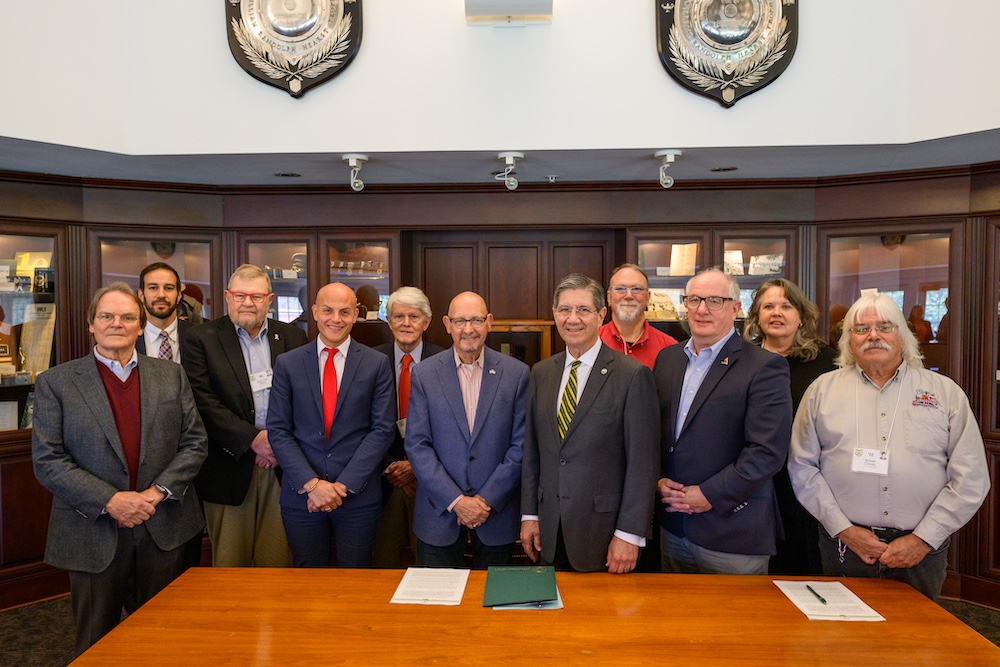
Greenbrier Military School Alumni Association members entrusted its museum and contents to the West Virginia School of Osteopathic Medicine (WVSOM) on Oct. 18 during an official agreement signing.
The Greenbrier Military School Museum, located on WVSOM’s campus in Lewisburg, W.Va., opened in 2001 to pay homage to the Greenbrier Military School, a private, all-male boarding high school and junior college that operated between 1812 and 1972, until the campus was purchased to be used as a medical school.
“[GMS] closed its doors and this campus transitioned into the West Virginia School of Osteopathic Medicine. The GMS Alumni Association and WVSOM have been partners ever since,” said WVSOM President James W. Nemitz, Ph.D. “With the signing of this new agreement, we ensure the continuity of that past into the future. Our action preserves the legacy of the Greenbrier Military School and its alumni, which includes two governors of West Virginia: Homer Holt, the 20th governor, and Jim Justice, the 36th governor.”
The agreement — among the GMS Alumni Association, the WVSOM Foundation, WVSOM and the Greenbrier Historical Society — was created to memorialize the former military school and to continue its legacy in the Greenbrier Valley through charitable investments.
WVSOM will now be responsible for the operation, maintenance and repair of the museum. The agreement transfers a $100,000 initial contribution to the WVSOM Foundation, the school’s charitable organization, for upkeep of the facility.
Mike Ruth, president of the GMS Alumni Association, said the agreement is meaningful to former cadets because of the impact the military school had on them.
“The military school has significance for all of us. It means so much to us because it changed our lives, no matter how long someone was here. [West Virginia] Gov. [Jim] Justice was here for a year and a half, I was here for three and some people were here for seven. For a school to have such an impact and to see its legacy continue is really meaningful,” Ruth said.
Ruth said he doesn’t know of many military schools that have been closed for more than 50 years that have a membership as active as the GMS Alumni Association.
“We have our own museum and archives, and so many people keep returning to campus — whether it’s during a reunion weekend or on their own,” he said. “It’s important to the individuals who went to school here and to their families. It’s amazing that we closed 50-plus years ago and are still doing this.”
The military alumni association began supporting WVSOM through scholarships in 1992 and have consistency financially supported students at the medical school ever since. The Greenbrier Military School Alumni Association Scholarship is presented to two students annually who excel academically and show strong leadership, determination and discipline. The alumni association also invests annually in Greenbrier County’s two high schools.
Monday, October 21, 2024 - 15:11
The Greenbrier Military School Museum, located on WVSOM’s campus in Lewisburg, W.Va., opened in 2001 to pay homage to the Greenbrier Military School, a private, all-male boarding high school and junior college that operated between 1812 and 1972, until the campus was purchased to be used as a medical school.
“[GMS] closed its doors and this campus transitioned into the West Virginia School of Osteopathic Medicine. The GMS Alumni Association and WVSOM have been partners ever since,” said WVSOM President James W. Nemitz, Ph.D. “With the signing of this new agreement, we ensure the continuity of that past into the future. Our action preserves the legacy of the Greenbrier Military School and its alumni, which includes two governors of West Virginia: Homer Holt, the 20th governor, and Jim Justice, the 36th governor.”
The agreement — among the GMS Alumni Association, the WVSOM Foundation, WVSOM and the Greenbrier Historical Society — was created to memorialize the former military school and to continue its legacy in the Greenbrier Valley through charitable investments.
WVSOM will now be responsible for the operation, maintenance and repair of the museum. The agreement transfers a $100,000 initial contribution to the WVSOM Foundation, the school’s charitable organization, for upkeep of the facility.
Mike Ruth, president of the GMS Alumni Association, said the agreement is meaningful to former cadets because of the impact the military school had on them.
“The military school has significance for all of us. It means so much to us because it changed our lives, no matter how long someone was here. [West Virginia] Gov. [Jim] Justice was here for a year and a half, I was here for three and some people were here for seven. For a school to have such an impact and to see its legacy continue is really meaningful,” Ruth said.
Ruth said he doesn’t know of many military schools that have been closed for more than 50 years that have a membership as active as the GMS Alumni Association.
“We have our own museum and archives, and so many people keep returning to campus — whether it’s during a reunion weekend or on their own,” he said. “It’s important to the individuals who went to school here and to their families. It’s amazing that we closed 50-plus years ago and are still doing this.”
The military alumni association began supporting WVSOM through scholarships in 1992 and have consistency financially supported students at the medical school ever since. The Greenbrier Military School Alumni Association Scholarship is presented to two students annually who excel academically and show strong leadership, determination and discipline. The alumni association also invests annually in Greenbrier County’s two high schools.
Monday, October 21, 2024 - 15:11
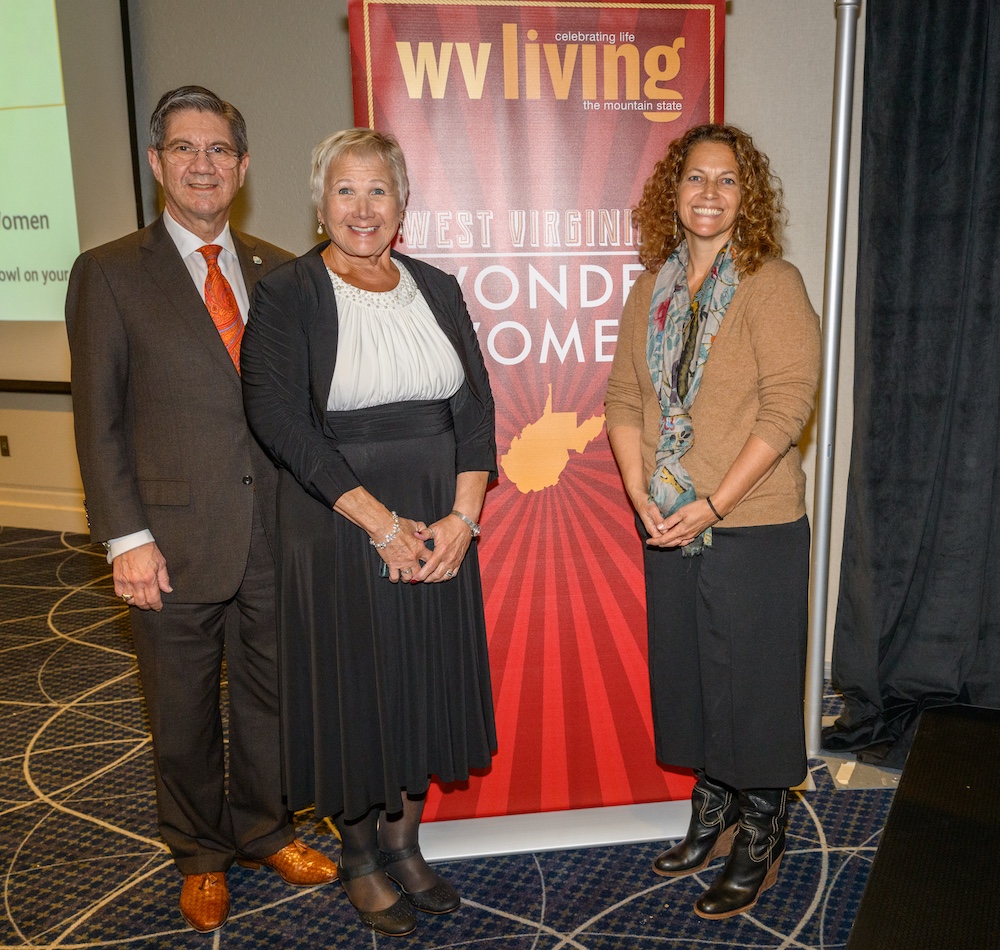
Chief operations officer and an alumna named ‘West Virginia Wonder Women’
Two women employed at the West Virginia School of Osteopathic Medicine (WVSOM) have been recognized for their work throughout the state.
Drema Hill, Ph.D., MSP, WVSOM’s chief operations officer, and Katherine Hill Calloway, D.O., MPH, regional assistant dean for the South Central Region of WVSOM’s Statewide Campus, were named to this year’s “West Virginia Wonder Women” by WV Living magazine.
They are two of 50 women featured in the publication’s fall 2024 issue for being identified as leaders who raise the bar in their communities and force change for the greater good in their industries.
“I am pleased to join my female colleagues across the state who were selected to be honored as West Virginia Wonder Women,” Hill said. “We all have different areas of expertise, but together, we make West Virginia stronger.”
Hill received a bachelor’s degree from West Virginia State University, a Master of Public Service Management degree from Cumberland University and a Ph.D. degree in human services with a specialization in health care administration from Capella University.
The Boone County, W.Va., native joined WVSOM in 2016 and became one of the school’s vice presidents in 2019. She has more than three decades of experience in public health leadership, including positions with the West Virginia Bureau for Public Health, the Tennessee Department of Health, Vanderbilt University’s Nashville Health Management Foundation and Comprehensive Care Center, and the Mid-Ohio Valley Regional Health Office. She currently serves as WVSOM’s vice president for community engagement and chief operations officer.
Hill develops and implements processes that help WVSOM achieve its strategic objectives. She also oversees the school’s Center for Rural and Community Health, Audio Visual and Production Department, Information Technology Department, Marketing and Communications Department and WVSOM’s rural health policy director. Her previous work in public health facilitates her ability to collaborate with external partners on statewide initiatives to improve the health of West Virginians.
“I have had a long career in public health and I still most enjoy working with community partners to foster and implement innovative ideas that improve health outcomes in disenfranchised populations. West Virginia is my home. I love the mountains and I love the people,” Hill said.
Before earning a D.O. degree from WVSOM in 2008, Calloway graduated from Wake Forest University with a double major in sports medicine and medical anthropology, and completed a Master of Public Health degree from Boston University.
She said she is honored to be recognized among so many women making positive change in West Virginia.
“It reminds me of how much strength we have in West Virginia. The things these women are doing are incredible and impactful in a way that will bring a legacy and will make a difference for generations to come,” she said. “To be considered part of that group of women is a huge honor and privilege.”
Calloway began working as a regional assistant dean in WVSOM’s Statewide Campus in 2022. The school’s Statewide Campus consists of seven regions across the state. In her role, she oversees third- and fourth-year medical student curriculum development and student clinical rotations. In addition to her duties at WVSOM, the Kanawha County native is the director of clinical development and provides inpatient care with HospiceCare West Virginia, the state’s largest nonprofit hospice service.
She has spent much of her adult life working overseas, with efforts such as assisting with post-conflict health care development in war-torn Kosovo, where she first managed a reproductive health program with the International Rescue Committee and later implemented health policy for 17 primary care health clinics as a health officer with the United Nations. She worked with the Clinton Foundation to reduce disparities in AIDS prevention and treatment in Mozambique, and with Emory University’s HIV clinic in Rwanda.
Years later she returned to West Virginia as a physician with Charleston Internal Medicine and then began serving in public health by shifting her practice to Cabin Creek Health Systems, where she developed and supported a nonpharmacologic pain management program as part of their medication-assisted treatment program for people in substance use recovery. She then moved to HospiceCare and WVSOM.
“The things I did globally were relevant to what we do here in our rural communities because there are so many similarities to chronic disease management or to working in areas that are resource poor. Coming back to West Virginia has been incredibly fulfilling to not only apply some of what we were doing with health care globally to our communities but also because this is part of my heritage,” she said.
WVSOM President James W. Nemitz, Ph.D., said he is proud of “wonder women” like Hill and Calloway whose careers as public health providers span decades and make West Virginia healthier.
“The women representing WVSOM have proven to be remarkable game changers in the health care industry and public health sector,” he said. “Dr. Calloway is a physician who has served communities locally and internationally, and Dr. Hill is an influential change-maker when it comes to public health and public policy in the state. Each year I am grateful that WV Living recognizes women for their successes and the impact they make.”
WV Living will honor the recipients at a West Virginia Wonder Women event on Oct. 30 in Charleston, W.Va.
Tuesday, October 8, 2024 - 09:13
Two women employed at the West Virginia School of Osteopathic Medicine (WVSOM) have been recognized for their work throughout the state.
Drema Hill, Ph.D., MSP, WVSOM’s chief operations officer, and Katherine Hill Calloway, D.O., MPH, regional assistant dean for the South Central Region of WVSOM’s Statewide Campus, were named to this year’s “West Virginia Wonder Women” by WV Living magazine.
They are two of 50 women featured in the publication’s fall 2024 issue for being identified as leaders who raise the bar in their communities and force change for the greater good in their industries.
“I am pleased to join my female colleagues across the state who were selected to be honored as West Virginia Wonder Women,” Hill said. “We all have different areas of expertise, but together, we make West Virginia stronger.”
Hill received a bachelor’s degree from West Virginia State University, a Master of Public Service Management degree from Cumberland University and a Ph.D. degree in human services with a specialization in health care administration from Capella University.
The Boone County, W.Va., native joined WVSOM in 2016 and became one of the school’s vice presidents in 2019. She has more than three decades of experience in public health leadership, including positions with the West Virginia Bureau for Public Health, the Tennessee Department of Health, Vanderbilt University’s Nashville Health Management Foundation and Comprehensive Care Center, and the Mid-Ohio Valley Regional Health Office. She currently serves as WVSOM’s vice president for community engagement and chief operations officer.
Hill develops and implements processes that help WVSOM achieve its strategic objectives. She also oversees the school’s Center for Rural and Community Health, Audio Visual and Production Department, Information Technology Department, Marketing and Communications Department and WVSOM’s rural health policy director. Her previous work in public health facilitates her ability to collaborate with external partners on statewide initiatives to improve the health of West Virginians.
“I have had a long career in public health and I still most enjoy working with community partners to foster and implement innovative ideas that improve health outcomes in disenfranchised populations. West Virginia is my home. I love the mountains and I love the people,” Hill said.
Before earning a D.O. degree from WVSOM in 2008, Calloway graduated from Wake Forest University with a double major in sports medicine and medical anthropology, and completed a Master of Public Health degree from Boston University.
She said she is honored to be recognized among so many women making positive change in West Virginia.
“It reminds me of how much strength we have in West Virginia. The things these women are doing are incredible and impactful in a way that will bring a legacy and will make a difference for generations to come,” she said. “To be considered part of that group of women is a huge honor and privilege.”
Calloway began working as a regional assistant dean in WVSOM’s Statewide Campus in 2022. The school’s Statewide Campus consists of seven regions across the state. In her role, she oversees third- and fourth-year medical student curriculum development and student clinical rotations. In addition to her duties at WVSOM, the Kanawha County native is the director of clinical development and provides inpatient care with HospiceCare West Virginia, the state’s largest nonprofit hospice service.
She has spent much of her adult life working overseas, with efforts such as assisting with post-conflict health care development in war-torn Kosovo, where she first managed a reproductive health program with the International Rescue Committee and later implemented health policy for 17 primary care health clinics as a health officer with the United Nations. She worked with the Clinton Foundation to reduce disparities in AIDS prevention and treatment in Mozambique, and with Emory University’s HIV clinic in Rwanda.
Years later she returned to West Virginia as a physician with Charleston Internal Medicine and then began serving in public health by shifting her practice to Cabin Creek Health Systems, where she developed and supported a nonpharmacologic pain management program as part of their medication-assisted treatment program for people in substance use recovery. She then moved to HospiceCare and WVSOM.
“The things I did globally were relevant to what we do here in our rural communities because there are so many similarities to chronic disease management or to working in areas that are resource poor. Coming back to West Virginia has been incredibly fulfilling to not only apply some of what we were doing with health care globally to our communities but also because this is part of my heritage,” she said.
WVSOM President James W. Nemitz, Ph.D., said he is proud of “wonder women” like Hill and Calloway whose careers as public health providers span decades and make West Virginia healthier.
“The women representing WVSOM have proven to be remarkable game changers in the health care industry and public health sector,” he said. “Dr. Calloway is a physician who has served communities locally and internationally, and Dr. Hill is an influential change-maker when it comes to public health and public policy in the state. Each year I am grateful that WV Living recognizes women for their successes and the impact they make.”
WV Living will honor the recipients at a West Virginia Wonder Women event on Oct. 30 in Charleston, W.Va.
Tuesday, October 8, 2024 - 09:13
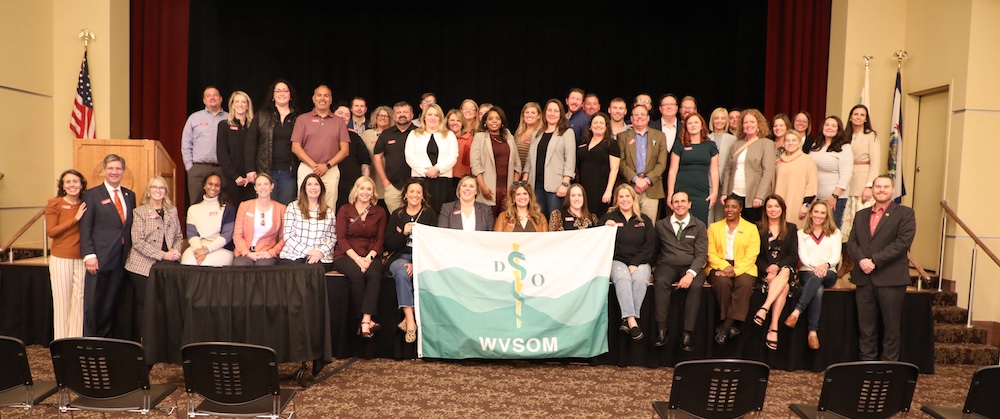
The 2024 Class of Leadership West Virginia visited WVSOM as part of its Healthcare Session. President James W. Nemitz, Ph.D., led the tour of the campus.
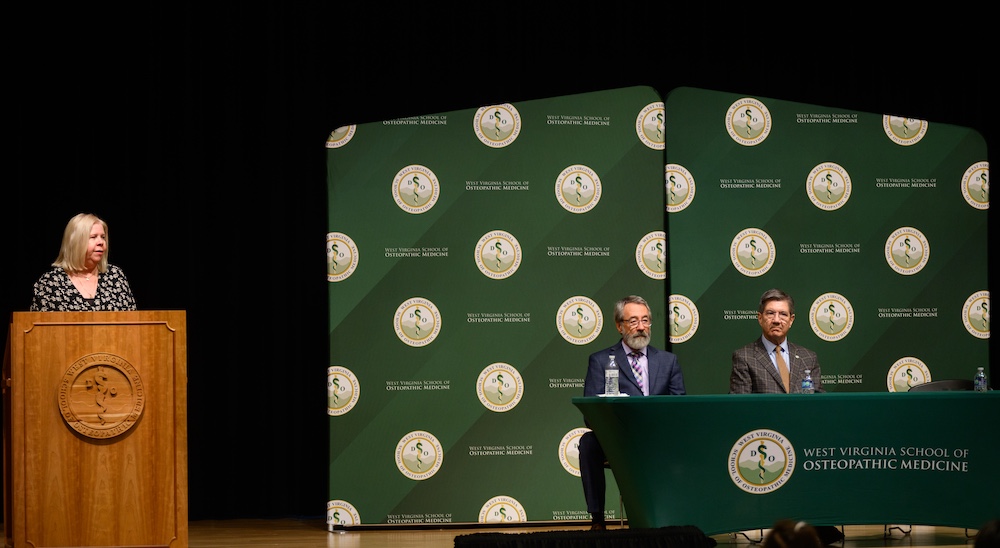
Cutline: Linda Boyd, D.O., WVSOM’s chief academic officer and Dean, talks about the dual degree program.
Today, WVSOM hosted a ceremonial signing for its partnership with Marshall University. The agreement allows the medical school’s students to supplement their Doctor of Osteopathic Medicine (D.O.) degree with an MPH degree through a program that lasts a total of five years.
During the ceremony on WVSOM’s Lewisburg campus, representatives of both institutions signed a memorandum of understanding describing the program’s admissions procedures, academic policies, tuition and billing, and other elements of the partnership.
In discussing the program earlier this year, the presidents of both institutions talked about the benefits to the students and to West Virginia.
James W. Nemitz, Ph.D., president of WVSOM, said the agreement allows students to broaden their base of knowledge in order to address issues impacting public health.
“The dual D.O./MPH degree program benefits our students who want a greater understanding of community health needs and solutions. Just as osteopathic medicine addresses the entire patient, not just the symptom, public health looks at the larger population, not just the patient. Marshall University offers an outstanding public health program, and we’re happy to work with President Brad Smith and the university’s administration to offer this option to our hard-working future physicians,” Nemitz said.
Brad D. Smith, president of Marshall University, said such dual degree programs are a key to addressing the region’s health care challenges.
“As we unveil this important dual degree program, we embark on a transformative journey for the health and well-being of West Virginia and Appalachia,” Smith said. “This innovative program stands as a beacon of hope, addressing the unique health care challenges of our region with strategic precision and unwavering dedication. By nurturing a new cadre of doctors also trained in public health, we not only elevate our communities’ health outcomes but also empower our people to thrive amidst adversity.”
The partnership established a path for interested students to attend osteopathic medical school for two years of preclinical education before starting a 10-month online program at Marshall for the MPH degree. Theprogram started this summer and is available to any WVSOM student in good academic standing after completion of their second year.
Following completion of the MPH program, WVSOM students will complete clinical rotations in the school’s Statewide Campus, where learning occurs in clinical settings such as physician offices, medical centers and hospitals.
The mission of the MPH program is to prepare a competent public health workforce, promote scholarly activities and reduce the burden of health disparities, particularly in West Virginia and Appalachia.
Linda Boyd, D.O., WVSOM’s chief academic officer and Dean, said the dual degree program will lead to innovative solutions for improved public health.
“WVSOM is thrilled to offer a D.O./MPH for our medical students by partnering with the Marshall program. Getting an MPH degree during medical school is one of the most popular dual degrees for medical students across the U.S. Learning more about public health will shape future doctors by allowing them to look at systemic problems in health care and work toward innovative solutions on the macro level, while also caring for their individual patients. Marshall has been a wonderful partner in developing this program, and we look forward to having many students engage in this value-added training,” Boyd said.
Michael Prewitt, Ph.D., dean of the College of Health Professions at Marshall University, said the school’s degree program provides unique experience and expertise.
“The MPH program is an interdisciplinary program whose graduates will seek to improve and maintain the health, safety and well-being of populations and to prevent and manage disease, disability and human suffering. Students will benefit from a comprehensive and rigorous curriculum along with specialty training. They will develop critical knowledge and skills in such areas as rural health, global health and health policy. Additional practicum experiences will provide students with the expertise and experience needed for public health practitioners,” Prewitt said.
Wednesday, October 30, 2024 - 08:12
Today, WVSOM hosted a ceremonial signing for its partnership with Marshall University. The agreement allows the medical school’s students to supplement their Doctor of Osteopathic Medicine (D.O.) degree with an MPH degree through a program that lasts a total of five years.
During the ceremony on WVSOM’s Lewisburg campus, representatives of both institutions signed a memorandum of understanding describing the program’s admissions procedures, academic policies, tuition and billing, and other elements of the partnership.
In discussing the program earlier this year, the presidents of both institutions talked about the benefits to the students and to West Virginia.
James W. Nemitz, Ph.D., president of WVSOM, said the agreement allows students to broaden their base of knowledge in order to address issues impacting public health.
“The dual D.O./MPH degree program benefits our students who want a greater understanding of community health needs and solutions. Just as osteopathic medicine addresses the entire patient, not just the symptom, public health looks at the larger population, not just the patient. Marshall University offers an outstanding public health program, and we’re happy to work with President Brad Smith and the university’s administration to offer this option to our hard-working future physicians,” Nemitz said.
Brad D. Smith, president of Marshall University, said such dual degree programs are a key to addressing the region’s health care challenges.
“As we unveil this important dual degree program, we embark on a transformative journey for the health and well-being of West Virginia and Appalachia,” Smith said. “This innovative program stands as a beacon of hope, addressing the unique health care challenges of our region with strategic precision and unwavering dedication. By nurturing a new cadre of doctors also trained in public health, we not only elevate our communities’ health outcomes but also empower our people to thrive amidst adversity.”
The partnership established a path for interested students to attend osteopathic medical school for two years of preclinical education before starting a 10-month online program at Marshall for the MPH degree. Theprogram started this summer and is available to any WVSOM student in good academic standing after completion of their second year.
Following completion of the MPH program, WVSOM students will complete clinical rotations in the school’s Statewide Campus, where learning occurs in clinical settings such as physician offices, medical centers and hospitals.
The mission of the MPH program is to prepare a competent public health workforce, promote scholarly activities and reduce the burden of health disparities, particularly in West Virginia and Appalachia.
Linda Boyd, D.O., WVSOM’s chief academic officer and Dean, said the dual degree program will lead to innovative solutions for improved public health.
“WVSOM is thrilled to offer a D.O./MPH for our medical students by partnering with the Marshall program. Getting an MPH degree during medical school is one of the most popular dual degrees for medical students across the U.S. Learning more about public health will shape future doctors by allowing them to look at systemic problems in health care and work toward innovative solutions on the macro level, while also caring for their individual patients. Marshall has been a wonderful partner in developing this program, and we look forward to having many students engage in this value-added training,” Boyd said.
Michael Prewitt, Ph.D., dean of the College of Health Professions at Marshall University, said the school’s degree program provides unique experience and expertise.
“The MPH program is an interdisciplinary program whose graduates will seek to improve and maintain the health, safety and well-being of populations and to prevent and manage disease, disability and human suffering. Students will benefit from a comprehensive and rigorous curriculum along with specialty training. They will develop critical knowledge and skills in such areas as rural health, global health and health policy. Additional practicum experiences will provide students with the expertise and experience needed for public health practitioners,” Prewitt said.
Wednesday, October 30, 2024 - 08:12
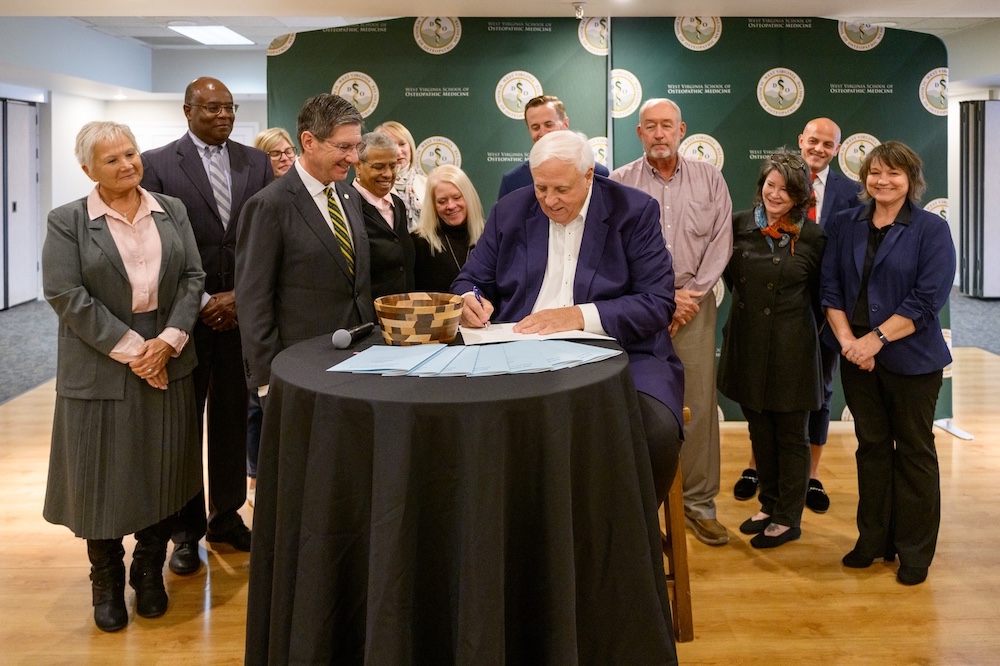
The West Virginia School of Osteopathic Medicine (WVSOM) on Oct. 18 celebrated a state appropriation of $13.6 million that will help the school with deferred maintenance issues on its main campus in Lewisburg, parts of which were constructed in 1922 when it housed the Greenbrier Military School.
West Virginia Gov. Jim Justice, who lives near WVSOM, visited the school to sign the legislation. WVSOM is a public school, and its buildings are owned by the state of West Virginia.
WVSOM President James W. Nemitz, Ph.D., welcomed the governor and guests to the signing ceremony.
“We are honored to have Governor Jim Justice here to celebrate the signing of legislation providing the West Virginia School of Osteopathic Medicine with $13.6 million in deferred maintenance funding. Governor Justice has been an incredible champion of WVSOM and a great neighbor,” Nemitz said.
Justice included the funding request on his call for the recent special session of the West Virginia Legislature.
“I’m so proud of this school. I’m so proud of all that you have done and all that you continue to do,” Justice said of WVSOM.
The governor said all West Virginians benefit from the school’s graduates and the medical services they provide across the state.
“What you have delivered is off the chart,” Justice said.
With an enrollment of about 800, the osteopathic medical school educates the highest number of students of West Virginia’s three medical schools. It welcomed one of its largest classes this fall and filled a new graduate program that offers a master’s in biomedical sciences degree.
WVSOM has educated many of the primary care physicians and medical specialists in the state. The school has nearly 1,000 graduates practicing in West Virginia.
Nemitz said keeping the school’s facilities updated is a key to building enrollment.
“Attracting students is a competition. Each year, we compete against all medical schools for enrollment. The quality and functionality of our facilities is an important component in our ability to successfully recruit students to campus and train them to be the next generation of physicians,” Nemitz said.
Nemitz said WVSOM is an important asset to West Virginia.
“We are in a growth mode at WVSOM, but that means we need every classroom available and in good condition. We must continue offering a modern and safe learning environment, quality programs and affordable tuition,” Nemitz said.
During the ceremony, Nemitz thanked many legislators and state officials for their support of WVSOM. The funding legislation — Senate Bill 2020 — passed unanimously in the State Senate and House of Delegates during the recent special session.
West Virginia Gov. Jim Justice, who lives near WVSOM, visited the school to sign the legislation. WVSOM is a public school, and its buildings are owned by the state of West Virginia.
WVSOM President James W. Nemitz, Ph.D., welcomed the governor and guests to the signing ceremony.
“We are honored to have Governor Jim Justice here to celebrate the signing of legislation providing the West Virginia School of Osteopathic Medicine with $13.6 million in deferred maintenance funding. Governor Justice has been an incredible champion of WVSOM and a great neighbor,” Nemitz said.
Justice included the funding request on his call for the recent special session of the West Virginia Legislature.
“I’m so proud of this school. I’m so proud of all that you have done and all that you continue to do,” Justice said of WVSOM.
The governor said all West Virginians benefit from the school’s graduates and the medical services they provide across the state.
“What you have delivered is off the chart,” Justice said.
With an enrollment of about 800, the osteopathic medical school educates the highest number of students of West Virginia’s three medical schools. It welcomed one of its largest classes this fall and filled a new graduate program that offers a master’s in biomedical sciences degree.
WVSOM has educated many of the primary care physicians and medical specialists in the state. The school has nearly 1,000 graduates practicing in West Virginia.
Nemitz said keeping the school’s facilities updated is a key to building enrollment.
“Attracting students is a competition. Each year, we compete against all medical schools for enrollment. The quality and functionality of our facilities is an important component in our ability to successfully recruit students to campus and train them to be the next generation of physicians,” Nemitz said.
Nemitz said WVSOM is an important asset to West Virginia.
“We are in a growth mode at WVSOM, but that means we need every classroom available and in good condition. We must continue offering a modern and safe learning environment, quality programs and affordable tuition,” Nemitz said.
During the ceremony, Nemitz thanked many legislators and state officials for their support of WVSOM. The funding legislation — Senate Bill 2020 — passed unanimously in the State Senate and House of Delegates during the recent special session.
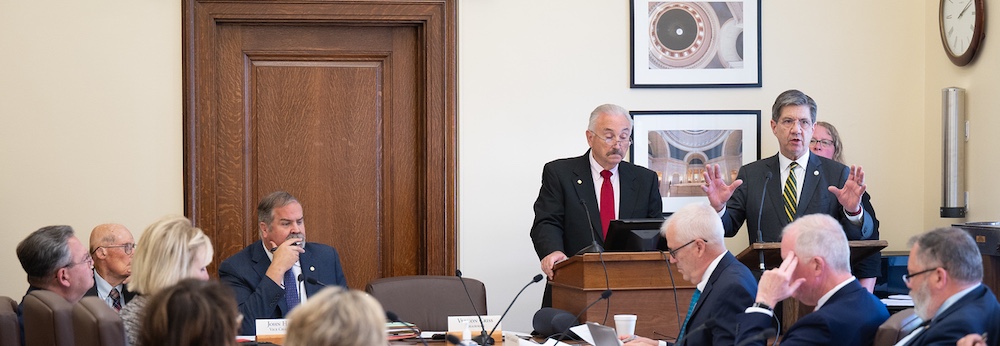
A special legislative session resumed Oct. 6. President James W. Nemitz, Ph.D., presented WVSOM's Deferred Maintenance request to the House Finance Committee.
House Finance Chairman Vernon Criss, R-Wood, directed the meeting, which was held at the West Virginia Capitol in Charleston. Photo by Perry Bennett, WV Legislative Photography.
House Finance Chairman Vernon Criss, R-Wood, directed the meeting, which was held at the West Virginia Capitol in Charleston. Photo by Perry Bennett, WV Legislative Photography.
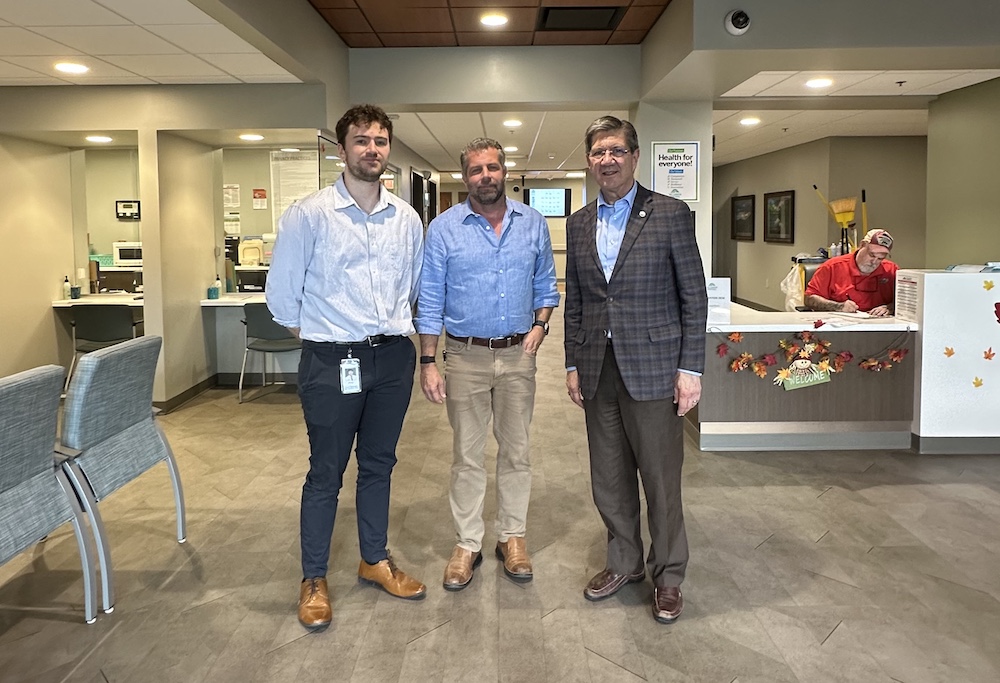
It was an exciting day in Williamson visiting with Christopher “Dino” Beckett, D.O., at the Williamson Health & Wellness Center, Inc. in Williamson, W.Va.
Joining with us was Tommy Fox, a WVSOM third-year student, who is clinical rotation with Dr. Beckett.
Joining with us was Tommy Fox, a WVSOM third-year student, who is clinical rotation with Dr. Beckett.
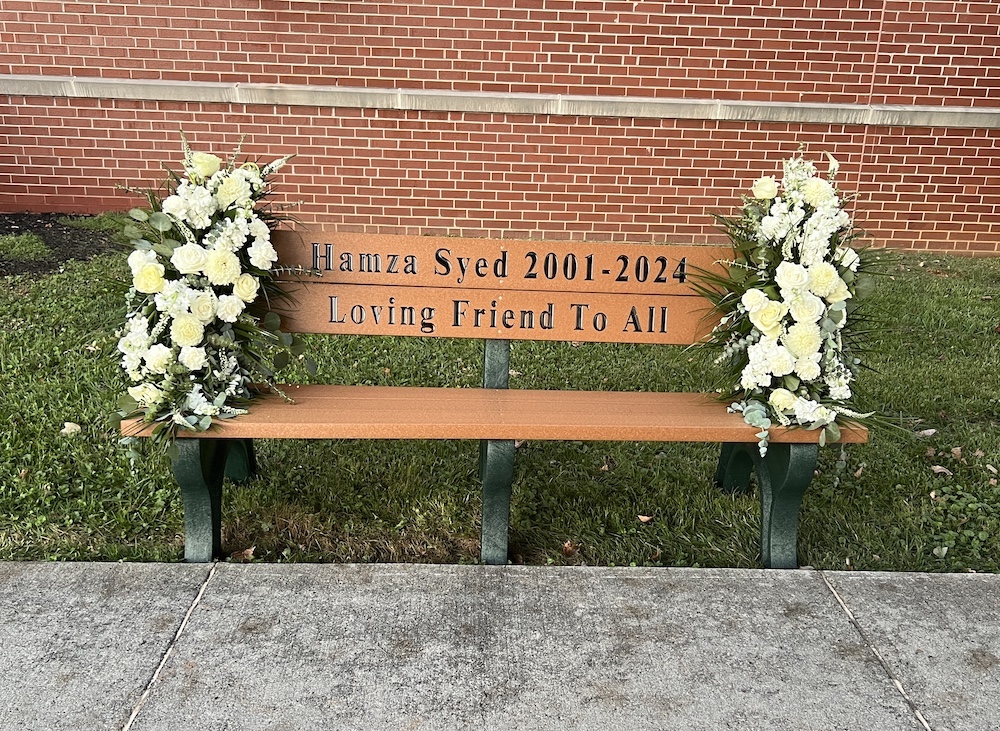
It was an honor to attend a special event in honor of Hamza Syed. To commemorate his life and the positive impact he had on so many, family, friends and WVSOM held a bench memorial event in his honor.
This memorial serves as a lasting tribute to the person he was and the joy he brought into our lives.
The event was Friday Oct. 4, at 6:30 p.m.
This memorial serves as a lasting tribute to the person he was and the joy he brought into our lives.
The event was Friday Oct. 4, at 6:30 p.m.