White Coat Ceremony celebrates 221 aspiring physicians
After seven weeks of classes, first-year students at the West Virginia School of Osteopathic Medicine (WVSOM) spent an afternoon away from their busy academic schedule for an important milestone.
The school’s White Coat Ceremony took place Sept. 13, celebrating the first step in 221 students’ paths to becoming physicians.
The ceremony, a tradition at many medical schools nationwide, is a rite of passage that marks students’ entry into the medical profession. The white coats are more than just attire; they are symbols of the commitment to serve others and uphold the highest standards of care in treating patients.
As members of the class crossed the stage to have their coats placed around their shoulders, they were applauded by family members, friends and WVSOM faculty and staff.
Miles Medina, D.O., a WVSOM Class of 2017 alumnus, served as keynote speaker. Medina, who is associate medical director of the emergency department and clinical director of the observation unit at Piedmont Henry Hospital in the Atlanta suburb of Stockbridge, Ga., said his invitation to speak at the event made him think of the first White Coat Ceremony he attended — his sister’s.
“I remember being awestruck at the recognition, the prestige, the respect,” Medina said. “I was so eager to get a coat of my own. I watched as she flourished in her career, and I became inspired.”
Medina was born and raised in suburban Chicago and earned a bachelor’s degree in molecular and cellular biology from the University of Illinois at Urbana-Champaign. He worked as a paramedic prior to enrolling at WVSOM. During medical school, he served as president of his class and received WVSOM’s Student D.O. of the Year award as well as the Donald Newell Sr. Award for Outstanding Graduating Senior.
Earlier this year, he was recognized as Piedmont Henry Hospital’s Physician of the Year.
In his speech, Medina urged students to remember that they are well equipped to manage the rigors of medical school.
“Today marks a monumental step where you take the first of many toward your commitment to medicine,” he said. “You have worked tirelessly to get where you are today. You’ve prepared yourselves for this moment and the journey ahead. You may not realize it, but you sit in a place where thousands of successful graduates have started.”
He told students that medical school goes by “in the blink of an eye” and advised members of the Class of 2028 to savor the time they have together and the friendships made at the school. He spoke about his wedding, which was attended by more than 60 fellow WVSOM graduates.
“What matters most about this coat is the journey of the person who wears it, and that journey starts here. You might find one of your classmates officiating your wedding. You might throw a baby shower for one of them. You might even find the love of your life,” Medina said. “Or maybe you’ll be like me, and on your wedding day you’ll yell to your spouse, ‘This is why “Country Roads” is the last song,’ as you stare at a circle of alumni you deeply adore.”
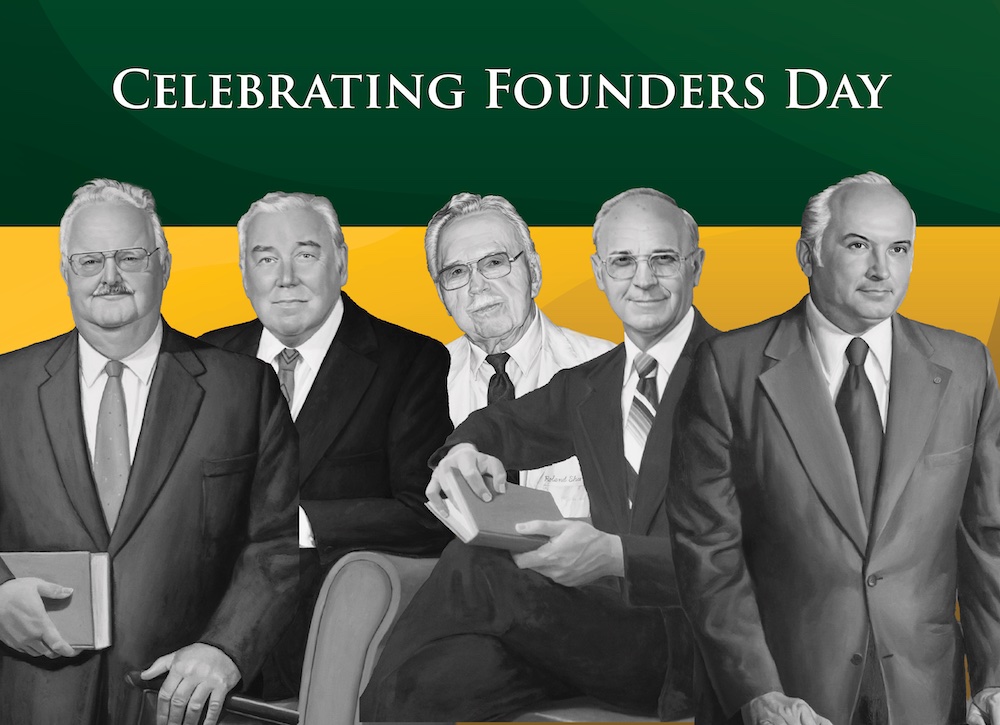
In an introduction to the ceremony, James W. Nemitz, Ph.D., WVSOM’s president, said the school produces physicians who practice across the U.S., and noted that WVSOM’s status as a leader in medical education wouldn’t be possible without the work of the founders who created the school more than a half-century ago.
“Fifty years later, we’ve populated small towns and cities throughout the state with highly competent, caring, dedicated physicians who serve their communities,” Nemitz said. “We also are populating communities throughout Appalachia and beyond. We have WVSOM alumni in every state of the union, practicing in every specialty and subspecialty.”
Linda Boyd, D.O., WVSOM’s chief academic officer, told students their coats represent the trust and confidence that they will earn from future patients as their careers progress.
“You walked into this room today as medical students, but when you don the white coat, you become a professional,” she said. “WVSOM holds high expectations for you, as does society, and I know you won’t let us down.”
Other White Coat Ceremony speakers included Randall Belt, D.O., chair of the WVSOM Board of Governors, and L. Faith Payne, D.O., secretary and treasurer of the WVSOM Alumni Association. Lewisburg Mayor Beverly White was among those in attendance at the event.
The ceremony closed with the assembled students reciting an oath of commitment, led by faculty member Jessica Smith-Kelly, D.O., in which members of the class pledged to maintain “a life of growth, to always expand my knowledge and to strengthen my understanding of human health and behavior.”
After seven weeks of classes, first-year students at the West Virginia School of Osteopathic Medicine (WVSOM) spent an afternoon away from their busy academic schedule for an important milestone.
The school’s White Coat Ceremony took place Sept. 13, celebrating the first step in 221 students’ paths to becoming physicians.
The ceremony, a tradition at many medical schools nationwide, is a rite of passage that marks students’ entry into the medical profession. The white coats are more than just attire; they are symbols of the commitment to serve others and uphold the highest standards of care in treating patients.
As members of the class crossed the stage to have their coats placed around their shoulders, they were applauded by family members, friends and WVSOM faculty and staff.
Miles Medina, D.O., a WVSOM Class of 2017 alumnus, served as keynote speaker. Medina, who is associate medical director of the emergency department and clinical director of the observation unit at Piedmont Henry Hospital in the Atlanta suburb of Stockbridge, Ga., said his invitation to speak at the event made him think of the first White Coat Ceremony he attended — his sister’s.
“I remember being awestruck at the recognition, the prestige, the respect,” Medina said. “I was so eager to get a coat of my own. I watched as she flourished in her career, and I became inspired.”
Medina was born and raised in suburban Chicago and earned a bachelor’s degree in molecular and cellular biology from the University of Illinois at Urbana-Champaign. He worked as a paramedic prior to enrolling at WVSOM. During medical school, he served as president of his class and received WVSOM’s Student D.O. of the Year award as well as the Donald Newell Sr. Award for Outstanding Graduating Senior.
Earlier this year, he was recognized as Piedmont Henry Hospital’s Physician of the Year.
In his speech, Medina urged students to remember that they are well equipped to manage the rigors of medical school.
“Today marks a monumental step where you take the first of many toward your commitment to medicine,” he said. “You have worked tirelessly to get where you are today. You’ve prepared yourselves for this moment and the journey ahead. You may not realize it, but you sit in a place where thousands of successful graduates have started.”
He told students that medical school goes by “in the blink of an eye” and advised members of the Class of 2028 to savor the time they have together and the friendships made at the school. He spoke about his wedding, which was attended by more than 60 fellow WVSOM graduates.
“What matters most about this coat is the journey of the person who wears it, and that journey starts here. You might find one of your classmates officiating your wedding. You might throw a baby shower for one of them. You might even find the love of your life,” Medina said. “Or maybe you’ll be like me, and on your wedding day you’ll yell to your spouse, ‘This is why “Country Roads” is the last song,’ as you stare at a circle of alumni you deeply adore.”
In an introduction to the ceremony, James W. Nemitz, Ph.D., WVSOM’s president, said the school produces physicians who practice across the U.S., and noted that WVSOM’s status as a leader in medical education wouldn’t be possible without the work of the founders who created the school more than a half-century ago.
“Fifty years later, we’ve populated small towns and cities throughout the state with highly competent, caring, dedicated physicians who serve their communities,” Nemitz said. “We also are populating communities throughout Appalachia and beyond. We have WVSOM alumni in every state of the union, practicing in every specialty and subspecialty.”
Linda Boyd, D.O., WVSOM’s chief academic officer, told students their coats represent the trust and confidence that they will earn from future patients as their careers progress.
“You walked into this room today as medical students, but when you don the white coat, you become a professional,” she said. “WVSOM holds high expectations for you, as does society, and I know you won’t let us down.”
Other White Coat Ceremony speakers included Randall Belt, D.O., chair of the WVSOM Board of Governors, and L. Faith Payne, D.O., secretary and treasurer of the WVSOM Alumni Association. Lewisburg Mayor Beverly White was among those in attendance at the event.
The ceremony closed with the assembled students reciting an oath of commitment, led by faculty member Jessica Smith-Kelly, D.O., in which members of the class pledged to maintain “a life of growth, to always expand my knowledge and to strengthen my understanding of human health and behavior.”
As part of the American Association of Colleges of Osteopathic Medicine’s national AACOM Advocacy Day, West Virginia School of Osteopathic Medicine President James W. Nemitz, Ph.D., visited Washington, D.C., meeting with U.S. Senator Shelley Moore Capito, R-W.Va., to gain support for AACOM’s priorities.
As part of the American Association of Colleges of Osteopathic Medicine’s national AACOM Advocacy Day, West Virginia School of Osteopathic Medicine (WVSOM) President James W. Nemitz, Ph.D., and Dean Linda Boyd, D.O., at left, visited Washington, D.C., to gain support for AACOM’s priorities, meeting with U.S. Representative Carol Miller, R-W.VA.
Advocates for improved osteopathic care in rural communities take their case to Capitol Hill as part of the American Association of Colleges of Osteopathic Medicine's Advocacy Day. West Virginia School of Osteopathic Medicine President James W. Nemitz, Ph.D., and Dean Linda Boyd, D.O., and government relations consultant Mike Fulton visited Washington, D.C., meeting with U.S. Senator Joe Manchin, I-W.Va., and his staff.
Advocates for improved osteopathic care in rural communities take their case to Capitol Hill as part of the American Association of Colleges of Osteopathic Medicine's Advocacy Day. WVSOM President James W. Nemitz. Ph.D., and Dean Linda Boyd, D.O., visited Washington, D.C., to meet in person with members of Congress and the Washington media to promote AACOM's osteopathic medicine congressional priorities. Nemitz and Boyd met with three members of West Virginia’s Congressional Delegation: U.S. Senator Joe Manchin, I-W.Va.; U.S. Senator Shelley Moore Capito, R-W.Va.; and U.S. Representative Carol Miller, R-W.Va. While at the nation’s Capital to gain support for AACOM’s priorities, Nemitz and Boyd also did interviews with reporter Steve Cohen of DC News Now.
First responders visit WVSOM to learn healthy ways to cope with trauma
Allen Lude, a West Virginia-based firefighter and emergency medical technician, Kari Mika-Lude, Ph.D., a licensed professional counselor who specializes in trauma in first responders; and Brian Hendricks, Ph.D., executive director of WVSOM’s CRCH; gather during WVSOM's presentation, “Code Grey: Finding Calm in the Chaos.” WVSOM’s Center for Rural and Community Health (CRCH) and Marshall University’s Center of Excellence for Recovery sponsored the event.
ARTICLE:
LEWISBURG, W.Va. – During a Sept. 11 presentation on the campus of the West Virginia School of Osteopathic Medicine (WVSOM), a husband-and-wife team used a common household situation to illustrate how stress can affect emergency medical technicians, firefighters, law enforcement officers and behavioral health professionals.
“Think about laundry,” said Kari Mika-Lude, Ph.D., a licensed professional counselor who specializes in trauma in first responders. “You throw one shirt on the floor next to the hamper. No big deal. But then you keep throwing shirts, pants and socks on the pile and soon you have several loads of laundry to deal with. It’s the same way with trauma. It’s not one specific call that gets to you. It can be the cumulative effect of years of calls.”
The presentation, “Code Grey: Finding Calm in the Chaos,” was sponsored by WVSOM’s Center for Rural and Community Health (CRCH) and Marshall University’s Center of Excellence for Recovery and was attended by about 37 first responders who received continuing education credits. The goal was to make workers more aware of their stress reactions and the impact they have on wellness. Recognizing these signs before they become problematic is critical in reducing burnout, post-traumatic stress disorder or other mental health conditions, and suicide — issues known to be more common in first responders than people in other professions.
Brian Hendricks, Ph.D., executive director of WVSOM’s CRCH, said offering education and opportunities to hear from members of this community is an important part of tackling the mental health crisis.
“Communities need to come together to offer opportunities, like the one today, to encourage the people who watch out for us each day to preserve their health,” Hendricks said. “The CRCH is committed to serving the state of West Virginia and helping to address the health inequities our rural communities and people experience.”
Mika-Lude’s husband, Allen Lude, a West Virginia-based firefighter and emergency medical technician, worked with the Transportation Security Administration in the years following the attacks on Sept. 11, 2001, which the presentation served to commemorate. Lude said first responders need healthy ways to cope with the relentless procession of traumatic situations they face.
“Whether you’re a 911 dispatcher or working in an emergency room, you’re getting constant trauma, and that affects the body. But there are ways to de-escalate those effects,” Lude said.
Mika-Lude, whose doctoral dissertation centered on emergency personnel, spoke about the impact of first-responder culture and how public perception and the profession’s internal expectations can result in dehumanization — the idea that emergency workers are somehow superhuman and don’t need down time or help with mental health.
“First responders are often compared to heroes,” Mika-Lude said. “But the term ‘hero’ unintentionally deprives first responders of humanness and a need for care, and perpetuates the idea that they must be all things to all people, regardless of their own needs. According to my research, dehumanization, regardless of whether it’s coming from the public or the organization itself, is strongly linked to burnout and suicidality.”
Lude recounted an incident from his own early career that left an indelible mark. While working with the fire department in Davis Creek, W.Va., at about age 20, his team was called to assist with a truck rollover accident.
“We were the first on the scene, and I knew it was going to be a bad call because the cab was crushed. But even at a young age you have a sense of duty, so you respond. It was a male patient, but I didn’t look at his face because I knew there was a good chance I would know the person,” he said. “I did what I could do to save him until the medics arrived, and then we needed the driver’s license to do the report. That’s when I realized it was my uncle. I had to call my mom to tell her to go to the hospital. She asked, ‘Is he going to make it?’ And as much as I wanted to say yes, I knew he wasn’t going to.”
Lude’s subsequent feelings of guilt prevented him from telling his co-workers he was related to the victim, and eventually took a toll on his emotional health that nearly ended his career — and, he said, could have ended his life.
“No matter how many times I tell this story, it still hurts. I’m telling it because everybody here has a story. You might think you’re Superman or Wonder Woman, but the fact is you’re human and you feel pain. That’s why we often try to disconnect and not be human while we’re on these calls, because it hurts. That’s why it’s important to establish a process ahead of time to find help when you get to that point. There’s always a reason to live to see the next day,” he said.
The presentation was funded by a grant through Volunteer West Virginia, an agency that administers national service programs throughout the state. The grant has also allowed WVSOM’s CRCH to recruit volunteers to pack more than 300 backpacks with school supplies for students in Greenbrier and Monroe counties; offer additional school supplies at community events; purchase 200 National Geographic books about the Sept. 11 attacks to distribute to young people; and visit elementary schools to read the books, teach about first-responder careers and emergency preparedness, among other projects.
# end #
WVSOM is a national leader in educating osteopathic physicians for primary care medicine in rural areas. Visit WVSOM online at www.wvsom.edu.
=
Allen Lude, a West Virginia-based firefighter and emergency medical technician, Kari Mika-Lude, Ph.D., a licensed professional counselor who specializes in trauma in first responders; and Brian Hendricks, Ph.D., executive director of WVSOM’s CRCH; gather during WVSOM's presentation, “Code Grey: Finding Calm in the Chaos.” WVSOM’s Center for Rural and Community Health (CRCH) and Marshall University’s Center of Excellence for Recovery sponsored the event.
ARTICLE:
LEWISBURG, W.Va. – During a Sept. 11 presentation on the campus of the West Virginia School of Osteopathic Medicine (WVSOM), a husband-and-wife team used a common household situation to illustrate how stress can affect emergency medical technicians, firefighters, law enforcement officers and behavioral health professionals.
“Think about laundry,” said Kari Mika-Lude, Ph.D., a licensed professional counselor who specializes in trauma in first responders. “You throw one shirt on the floor next to the hamper. No big deal. But then you keep throwing shirts, pants and socks on the pile and soon you have several loads of laundry to deal with. It’s the same way with trauma. It’s not one specific call that gets to you. It can be the cumulative effect of years of calls.”
The presentation, “Code Grey: Finding Calm in the Chaos,” was sponsored by WVSOM’s Center for Rural and Community Health (CRCH) and Marshall University’s Center of Excellence for Recovery and was attended by about 37 first responders who received continuing education credits. The goal was to make workers more aware of their stress reactions and the impact they have on wellness. Recognizing these signs before they become problematic is critical in reducing burnout, post-traumatic stress disorder or other mental health conditions, and suicide — issues known to be more common in first responders than people in other professions.
Brian Hendricks, Ph.D., executive director of WVSOM’s CRCH, said offering education and opportunities to hear from members of this community is an important part of tackling the mental health crisis.
“Communities need to come together to offer opportunities, like the one today, to encourage the people who watch out for us each day to preserve their health,” Hendricks said. “The CRCH is committed to serving the state of West Virginia and helping to address the health inequities our rural communities and people experience.”
Mika-Lude’s husband, Allen Lude, a West Virginia-based firefighter and emergency medical technician, worked with the Transportation Security Administration in the years following the attacks on Sept. 11, 2001, which the presentation served to commemorate. Lude said first responders need healthy ways to cope with the relentless procession of traumatic situations they face.
“Whether you’re a 911 dispatcher or working in an emergency room, you’re getting constant trauma, and that affects the body. But there are ways to de-escalate those effects,” Lude said.
Mika-Lude, whose doctoral dissertation centered on emergency personnel, spoke about the impact of first-responder culture and how public perception and the profession’s internal expectations can result in dehumanization — the idea that emergency workers are somehow superhuman and don’t need down time or help with mental health.
“First responders are often compared to heroes,” Mika-Lude said. “But the term ‘hero’ unintentionally deprives first responders of humanness and a need for care, and perpetuates the idea that they must be all things to all people, regardless of their own needs. According to my research, dehumanization, regardless of whether it’s coming from the public or the organization itself, is strongly linked to burnout and suicidality.”
Lude recounted an incident from his own early career that left an indelible mark. While working with the fire department in Davis Creek, W.Va., at about age 20, his team was called to assist with a truck rollover accident.
“We were the first on the scene, and I knew it was going to be a bad call because the cab was crushed. But even at a young age you have a sense of duty, so you respond. It was a male patient, but I didn’t look at his face because I knew there was a good chance I would know the person,” he said. “I did what I could do to save him until the medics arrived, and then we needed the driver’s license to do the report. That’s when I realized it was my uncle. I had to call my mom to tell her to go to the hospital. She asked, ‘Is he going to make it?’ And as much as I wanted to say yes, I knew he wasn’t going to.”
Lude’s subsequent feelings of guilt prevented him from telling his co-workers he was related to the victim, and eventually took a toll on his emotional health that nearly ended his career — and, he said, could have ended his life.
“No matter how many times I tell this story, it still hurts. I’m telling it because everybody here has a story. You might think you’re Superman or Wonder Woman, but the fact is you’re human and you feel pain. That’s why we often try to disconnect and not be human while we’re on these calls, because it hurts. That’s why it’s important to establish a process ahead of time to find help when you get to that point. There’s always a reason to live to see the next day,” he said.
The presentation was funded by a grant through Volunteer West Virginia, an agency that administers national service programs throughout the state. The grant has also allowed WVSOM’s CRCH to recruit volunteers to pack more than 300 backpacks with school supplies for students in Greenbrier and Monroe counties; offer additional school supplies at community events; purchase 200 National Geographic books about the Sept. 11 attacks to distribute to young people; and visit elementary schools to read the books, teach about first-responder careers and emergency preparedness, among other projects.
# end #
WVSOM is a national leader in educating osteopathic physicians for primary care medicine in rural areas. Visit WVSOM online at www.wvsom.edu.
=
West Virginia School of Osteopathic Medicine students Sarah Lester of McDowell County and Emma Beatty, a native of Clay County and resident of Wetzel County, were having a good day at the WV Business Summit.
The two first-year medical students were at The Greenbrier for the announcement of their scholarships from The Health Plan.
The pair have been awarded The Health Plan Scholarship, which covers tuition and fees and is renewable for four years, meaning the students can graduate medical school without worrying about those costs. In return, the students will stay and practice medicine in West Virginia for at least four years.
During the West Virginia Chamber of Commerce #WVBusinessSummit, Jeff Knight, president and CEO of The Health Plan (THP), first row on the right, and I joined with the students to announce the scholarships.
Then it got better!
U.S. Senator Joe Manchin III, I-WV, who spoke at the Business Summit on Thursday and was honored for his service to West Virginia, took time after his presentation to meet and congratulate the students.
Senator Manchin joined with Knight, Nemitz, State Senate Woodrum, and Lisa Spencer, WVSOM Director Financial Aid, in recognizing the students.
During his presentation at the summit, Manchin became emotional when talking about the late Governor Arch Moore, father of U.S. Senator Shelley Moore Capito, R-W.Va., once calling Manchin’s father, who had campaigned against Moore, with an offer to help with a government issue, because, regardless of politics, Manchin’s father was Moore's constituent.
West Virginia’s senior senator then took time from the crowd gathered after his own fete to congratulate the two students – his constituents — and recognize The Health Plan and WVSOM.
I’m guessing our students — Sarah and Emma — might get emotional remembering the day Senator Manchin and their state legislators made time for two constituents.
The two first-year medical students were at The Greenbrier for the announcement of their scholarships from The Health Plan.
The pair have been awarded The Health Plan Scholarship, which covers tuition and fees and is renewable for four years, meaning the students can graduate medical school without worrying about those costs. In return, the students will stay and practice medicine in West Virginia for at least four years.
During the West Virginia Chamber of Commerce #WVBusinessSummit, Jeff Knight, president and CEO of The Health Plan (THP), first row on the right, and I joined with the students to announce the scholarships.
Then it got better!
U.S. Senator Joe Manchin III, I-WV, who spoke at the Business Summit on Thursday and was honored for his service to West Virginia, took time after his presentation to meet and congratulate the students.
Senator Manchin joined with Knight, Nemitz, State Senate Woodrum, and Lisa Spencer, WVSOM Director Financial Aid, in recognizing the students.
During his presentation at the summit, Manchin became emotional when talking about the late Governor Arch Moore, father of U.S. Senator Shelley Moore Capito, R-W.Va., once calling Manchin’s father, who had campaigned against Moore, with an offer to help with a government issue, because, regardless of politics, Manchin’s father was Moore's constituent.
West Virginia’s senior senator then took time from the crowd gathered after his own fete to congratulate the two students – his constituents — and recognize The Health Plan and WVSOM.
I’m guessing our students — Sarah and Emma — might get emotional remembering the day Senator Manchin and their state legislators made time for two constituents.
Our West Virginia School of Osteopathic Medicine students Sarah Lester of McDowell County and Emma Beatty, a native of Clay County and resident of Wetzel County, were having a good day at the West Virginia Business Summit.
The two first-year medical students were at The Greenbrier for the announcement of their scholarships from The Health Plan.
The pair have been awarded The Health Plan Scholarship, which covers tuition and fees and is renewable for four years, meaning the students can graduate medical school without worrying about those costs. In return, the students will stay and practice medicine in West Virginia for at least four years.
During the West Virginia Chamber of Commerce #WVBusinessSummit, Jeff Knight, president and CEO of The Health Plan (THP), first row on the right, and I joined with the students to announce the scholarships.
Then it got better!
Despite a full day of meetings, members of the West Virginia Legislature, second row left to right, took time from their schedules to meet and congratulate the students. Delegate Roger Hanshaw, R-Clay, Speaker of the West Virginia House of Delegates, State Senator Jack Woodrum, R-10th District, and State Senator Ryan Weld, R-1st District, joined the celebration.
Hanshaw, who represents Clay County and knows Beatty and her family, left fellow legislators to congratulation the medical students. Woodrum, whose 10th District includes Lewisburg and WVSOM, and Weld, whose 1st District includes Wheeling and The Health Plan’s main office, delayed attending other meetings to congratulate the students. The three state officials also recognized The Health Plan and WVSOM for working to provide doctors for West Virginia.
The two first-year medical students were at The Greenbrier for the announcement of their scholarships from The Health Plan.
The pair have been awarded The Health Plan Scholarship, which covers tuition and fees and is renewable for four years, meaning the students can graduate medical school without worrying about those costs. In return, the students will stay and practice medicine in West Virginia for at least four years.
During the West Virginia Chamber of Commerce #WVBusinessSummit, Jeff Knight, president and CEO of The Health Plan (THP), first row on the right, and I joined with the students to announce the scholarships.
Then it got better!
Despite a full day of meetings, members of the West Virginia Legislature, second row left to right, took time from their schedules to meet and congratulate the students. Delegate Roger Hanshaw, R-Clay, Speaker of the West Virginia House of Delegates, State Senator Jack Woodrum, R-10th District, and State Senator Ryan Weld, R-1st District, joined the celebration.
Hanshaw, who represents Clay County and knows Beatty and her family, left fellow legislators to congratulation the medical students. Woodrum, whose 10th District includes Lewisburg and WVSOM, and Weld, whose 1st District includes Wheeling and The Health Plan’s main office, delayed attending other meetings to congratulate the students. The three state officials also recognized The Health Plan and WVSOM for working to provide doctors for West Virginia.
First-year WVSOM medical students recently completed their first mandatory activity of the academic year — a simulation designed to introduce the concept of the social determinants of health, which encompasses economic stability, access to education and other nonmedical factors that impact a person’s health and quality of life.
Faculty and administration helped creator Madison Robinson and students with the program, including WVSOM President James W. Nemitz, PH.D., at left, and WVSOM Board of Governors member Peter J. Ward, M.S., Ph.D., center.
Read the article here:
In WVSOM’s student-designed activity, Appalachian stories illustrate the social determinants of health
LEWISBURG, W.Va. – “Raise your hand if this simulation made you feel anxious or stressed,” said Courtney Eleazer, Ph.D., a faculty member at the West Virginia School of Osteopathic Medicine (WVSOM).
A sea of arms went up.
First-year medical students had just completed the first mandatory activity of the academic year — a simulation designed to introduce the concept of the social determinants of health, which encompasses economic stability, access to education and other nonmedical factors that impact a person’s health and quality of life.
In the activity, each student was randomly assigned one of seven characters to portray. There was “Jack,” a widowed coal miner who didn’t complete high school. Some students took the role of “Kiersten,” a young woman with an abusive boyfriend. Others were “Susanne,” a retired grocer raising two grandchildren, and “Hunter,” an unhoused, unemployed man suffering from mental illness and hepatitis C. Students spent a month — condensed into an hour for the purposes of the activity — living the lives of their characters and trying to maintain good health for themselves and their dependents.
Created to mimic some of the health inequities present in rural Appalachia, many of the simulation’s characters had limited income, lack of access to health care and education, poor social support systems, and experienced discrimination based on their social status. According to U.S. Consumer Financial Protection Bureau data, the median household income in rural Appalachia is about $49,000. And the federal government’s National Center for Education Statistics reported that about 66% of adults living in Appalachia read at or below an eighth-grade level.
If the activity made students anxious, it was by design, said Eleazer, who teaches in WVSOM’s Department of Biomedical Sciences and helped lead the activity.
“By placing students in the role of patients, this simulation serves to recreate the chronic stress many rural community members face in response to health inequities,” Eleazer said. “We know social determinants have a direct impact on health quality and outcomes, but they also can have an indirect impact by affecting mental health. Chronic stress is a factor in the development and severity of diseases such as cardiovascular disease, obesity, diabetes and auto-immune disorders.”
The social determinants of health, as defined by the World Health Organization and adopted in the U.S. by the Centers for Disease Control and Prevention, are economic stability, education access and quality, health care access and quality, neighborhood and built environment, and social and community context.
The simulation’s objectives were to help WVSOM students identify these determinants, recognize their effects on patient health and outcomes, and find strategies for health care workers to address them.
DESIGNED BY A STUDENT
The activity was created by Madison Robinson, a fourth-year WVSOM student. The characters ring true because Robinson based them on people she knew growing up in the Mountain State and patients she interacted with while volunteering at a hospital while earning an undergraduate degree at West Virginia Wesleyan College. A “poverty simulation” she experienced at Wesleyan inspired her to design an activity aimed at educating medical students about the social determinants of health — but the format, rules and goals were Robinson’s alone.
Robinson, a Kanawha County native and lifelong West Virginian, had the idea for the simulation after noticing that many members of her class were from urban areas in other states. She wondered whether those students might be surprised by some of the situations they would encounter during their final two years of medical school, which consists of clinical rotations at sites across the state through WVSOM’s Statewide Campus system.
“I realized early on that I was the only one in my friend group from West Virginia and that there wasn’t a lot of rural representation,” she said. “A lot of my peers were from larger cities, so they weren’t prepared to go into their third year in terms of living in a rural neighborhood. Knowing how to survive in a rural area is one thing, but learning to interact with people who have centuries of ancestry there is another. To take my mind off studying, I got back to graphic design, a hobby of mine, and came up with these characters.”
Besides “Jack,” “Kiersten,” “Susanne” and “Hunter,” the simulation also included “Tamara,” a second-grade teacher who is part of the only black family in town; “Brooke,” a young pregnant woman who is estranged from her family; and “Ashton,” a nonbinary individual who is seeking gender-affirming care.
Each character deals with obstacles that mirror those of the real people Robinson used as models. “Jack,” who is functionally illiterate, is unable to read the materials given to him by emergency room staff. “Hunter,” who was incarcerated following a bar fight, is unable to obtain employment because of his arrest. “Kiersten” has been living with opioid use disorder since incurring a volleyball injury during high school, and she has no transportation, requiring her to walk to many of the locations in the simulation.
The students portraying these characters must complete activities of day-to-day life such as working, paying bills, shopping for groceries, caring for children and seeking treatment for health issues. Stations are set up representing workplaces, stores, banks, child care centers, hospitals, homeless shelters, police stations and social services agencies. In the simulation presented to first-year medical students, WVSOM employee volunteers took on the roles of workers at each station.
Katie Williams, Ph.D., WVSOM’s director of academic technology, portrayed an employer during the event. As students rushed around the room trying to complete their daily activities in the allotted time, she admonished those who were late: “You barely made it,” or “Why can’t you be here on time?”
“We’re trying to create situations that our students’ future patients might feasibly have encountered,” Williams said. “Some of the characters have very low-wage jobs, and there are stigmas attached to that. It’s a realistic experience in that if you’re late for work, it’s going to cause problems. Or what happens if you can’t come to work multiple weeks in a row? Some patients experience things that require them to prioritize and say, ‘Do I even try to go to work today?’”
The simulation makes aspiring physicians aware of the tradeoffs that are sometimes forced on patients in rural or low-wage areas. At the grocery store, students can choose to buy either “nutritious” food, at a high cost, or “non-nutritious” food, which is less expensive but causes health problems for their children or themselves. Those without transportation might have to shop at the convenience store, which is closer than the grocery store but is more expensive and offers foods that are less healthful.
Each student receives a set of “luck of the draw” cards that can trigger unexpected setbacks in their attempts to complete daily activities. Their car might break down or their child could have an illness, causing them to miss work. Or they might have a health emergency requiring a costly ambulance ride.
Robinson said the activity is intended to immerse students in the lives of patients similar to those they will treat if they become physicians in rural Appalachia.
“The best thing about the simulation is that you’re really able to step into the shoes of these characters. You’re Jack for an hour, and you have to try to make it through life as a coal miner. I hope it’s an eye-opening experience,” she said.
INCLUSION IN THE CURRICULUM
WVSOM’s faculty and administration spent several years developing a new curriculum for first- and second-year osteopathic medical students. The “Finding Health” curriculum — named for a quote by Andrew Taylor Still, D.O., the founder of osteopathic medicine, who once wrote, “To find health should be the object of the doctor; anyone can find disease” — includes a focus on wellness, nutrition, exercise, lifestyle and preventive medicine, while also incorporating a Justice, Equity, Diversity and Inclusion (JEDI) thread.
When the new curriculum was rolled out to WVSOM’s incoming Class of 2028 in late July, Robinson’s simulation was part of it, concluding a week of orientation activities. Robinson, on break from fourth-year rotations in the Elkins and Buckhannon area, returned to the school’s Lewisburg campus to lead the activity with Eleazer. The simulation was funded in part by WVSOM’s Rural Health Initiative program, through a grant from West Virginia’s Higher Education Policy Commission.
Robinson first presented the simulation to her fellow students during an extracurricular event in April 2023 that was sponsored in part by WVSOM’s Center for Rural and Community Health. Eleazer said that after those in charge of the school’s curriculum saw the simulation, they decided it should become a mandatory part of students’ coursework, given that rural primary care is a stated focus of the school’s mission.
“Once we heard about this activity designed by one of our own students, we knew we needed to work with her on incorporating it into the curriculum,” she said. “We believe this experience will set the tone for a lifelong journey of providing high-quality care and empathy to patients from all walks of life.”
WVSOM was already teaching medical students the social determinants of health, but Eleazer said Robinson’s simulation allowed for a firsthand look at some of the challenges some Appalachian patients face.
“We’ve always done a good job of teaching the humanistic aspects of health care, including rural health care and health inequities. But the new curriculum allows us to work together to organize and streamline content to build students’ knowledge and skill set over their four years with us. We’ve always had lectures dedicated to rural communities, but now we are providing even more opportunities for students to learn to address these barriers.” Eleazer said.
THE STUDENT EXPERIENCE
Following the activity, Eleazer and Robinson led a debriefing session in which students described what they’d just experienced. One student said the simulation pointed out how inaccessible social services can be to people who are in need of help.
“My character was racing to the bank to pay bills after work, and it made me think about when I was applying for Medicaid, which is something I had to do in real life. I had to call them before 5 p.m., but many days I wasn’t free until after five, so it was hard to find 10 minutes to call. The simulation reminded me that even though services might be available, you may not be able to get them because you’re struggling with time limitations,” he said.
Another student, in the role of “Kiersten,” the young opioid user whose abusive boyfriend kept her in the throes of addiction, said he learned how easy it is to spiral down a path that offers little hope of a way out.
“You’d get sick and then you couldn’t go to work, so you’d have to go the homeless shelter because you couldn’t afford your home anymore. You had to steal food just to survive. It snowballed quickly, because once you’re in a place of economic disadvantage, it’s hard to get out,” the student said.
Dana Engram, a student who recently arrived at WVSOM from Brooklyn, N.Y., portrayed “Susanne,” the retiree forced to raise two grandchildren because her daughter is suffering from heroin addiction.
“It was a great experience, because it made me see some of the difficulties and challenges residents of rural areas have to deal with,” Engram said. “Playing the role of someone who’s worried about paying bills and trying to maintain the welfare of children made it feel real. I learned that you have to make impossible choices. Sometimes you end up overlooking your own health to take care of your family,” he said.
In his rush to complete more required activities than time allowed, Engram could be seen racing around the room carrying Susanne’s grandchildren — dolls, for the purposes of the simulation — by their feet. Child protective services eventually removed the infants from his custody.
“I was hustling to get them to day care on time, and I did the wrong thing by carrying them upside down,” Engram said. “They’re in the foster care system now, but I’m going to get them back.”
A PROVEN TEACHING METHOD
Robinson has presented research showing that her simulation is beneficial in communicating the social determinants of health at the West Virginia Rural Health Association Conference and the American Association of Colleges of Osteopathic Medicine Educating Leaders Conference. Her research is based on data from pre-activity and post-activity surveys that asked students to recall specific pieces of information they’d learned.
In addition to quantitative research, Robinson collected anecdotal data from medical students who experienced the simulation. One student wrote, anonymously, “I have always known that I want to stay within the state to work as a physician, but this has empowered me even more to work harder so I can be the doctor the people of Appalachia deserve.”
Rebecca Thacker, who helped implement the activity as program director of WVSOM’s Rural Health Initiative, pointed out that the simulation is not meant to paint Appalachians in a negative light, and that not all residents of the region are living with the circumstances the activity uses as examples of potential patients.
“These characters are not intended to stereotype Appalachians or West Virginians. Instead, they highlight the impact of social determinants on health care outcomes,” Thacker said. “Our goal is to cultivate providers who are aware of how social factors influence health and access to care, enabling them to deliver more compassionate and equitable care to diverse populations.”
Still, Robinson said it’s important for WVSOM’s medical students to learn to pay attention to the stories behind the illnesses they see in patients. It’s part of the “whole person” philosophy that underpins osteopathic medicine.
“Once we’re working in the hospital, we aren’t seeing somebody who has diabetes or cardiovascular disease. We’re seeing Tom, who can’t afford his medications or has trouble cooking healthy meals. And that’s why I chose osteopathic medicine, because osteopathic physicians have been thinking that way forever — treating the person, not just the disease,” she said.
As she begins her final year of medical school, Robinson said she’s proud of the legacy she’s leaving in playing a role in the way WVSOM instructs students on the social determinants of health.
“This simulation is my baby,” she said. “Now that it’s part of the curriculum, I’m excited it’s going to live on past me after I graduate and go off to residency.”
Faculty and administration helped creator Madison Robinson and students with the program, including WVSOM President James W. Nemitz, PH.D., at left, and WVSOM Board of Governors member Peter J. Ward, M.S., Ph.D., center.
Read the article here:
In WVSOM’s student-designed activity, Appalachian stories illustrate the social determinants of health
LEWISBURG, W.Va. – “Raise your hand if this simulation made you feel anxious or stressed,” said Courtney Eleazer, Ph.D., a faculty member at the West Virginia School of Osteopathic Medicine (WVSOM).
A sea of arms went up.
First-year medical students had just completed the first mandatory activity of the academic year — a simulation designed to introduce the concept of the social determinants of health, which encompasses economic stability, access to education and other nonmedical factors that impact a person’s health and quality of life.
In the activity, each student was randomly assigned one of seven characters to portray. There was “Jack,” a widowed coal miner who didn’t complete high school. Some students took the role of “Kiersten,” a young woman with an abusive boyfriend. Others were “Susanne,” a retired grocer raising two grandchildren, and “Hunter,” an unhoused, unemployed man suffering from mental illness and hepatitis C. Students spent a month — condensed into an hour for the purposes of the activity — living the lives of their characters and trying to maintain good health for themselves and their dependents.
Created to mimic some of the health inequities present in rural Appalachia, many of the simulation’s characters had limited income, lack of access to health care and education, poor social support systems, and experienced discrimination based on their social status. According to U.S. Consumer Financial Protection Bureau data, the median household income in rural Appalachia is about $49,000. And the federal government’s National Center for Education Statistics reported that about 66% of adults living in Appalachia read at or below an eighth-grade level.
If the activity made students anxious, it was by design, said Eleazer, who teaches in WVSOM’s Department of Biomedical Sciences and helped lead the activity.
“By placing students in the role of patients, this simulation serves to recreate the chronic stress many rural community members face in response to health inequities,” Eleazer said. “We know social determinants have a direct impact on health quality and outcomes, but they also can have an indirect impact by affecting mental health. Chronic stress is a factor in the development and severity of diseases such as cardiovascular disease, obesity, diabetes and auto-immune disorders.”
The social determinants of health, as defined by the World Health Organization and adopted in the U.S. by the Centers for Disease Control and Prevention, are economic stability, education access and quality, health care access and quality, neighborhood and built environment, and social and community context.
The simulation’s objectives were to help WVSOM students identify these determinants, recognize their effects on patient health and outcomes, and find strategies for health care workers to address them.
DESIGNED BY A STUDENT
The activity was created by Madison Robinson, a fourth-year WVSOM student. The characters ring true because Robinson based them on people she knew growing up in the Mountain State and patients she interacted with while volunteering at a hospital while earning an undergraduate degree at West Virginia Wesleyan College. A “poverty simulation” she experienced at Wesleyan inspired her to design an activity aimed at educating medical students about the social determinants of health — but the format, rules and goals were Robinson’s alone.
Robinson, a Kanawha County native and lifelong West Virginian, had the idea for the simulation after noticing that many members of her class were from urban areas in other states. She wondered whether those students might be surprised by some of the situations they would encounter during their final two years of medical school, which consists of clinical rotations at sites across the state through WVSOM’s Statewide Campus system.
“I realized early on that I was the only one in my friend group from West Virginia and that there wasn’t a lot of rural representation,” she said. “A lot of my peers were from larger cities, so they weren’t prepared to go into their third year in terms of living in a rural neighborhood. Knowing how to survive in a rural area is one thing, but learning to interact with people who have centuries of ancestry there is another. To take my mind off studying, I got back to graphic design, a hobby of mine, and came up with these characters.”
Besides “Jack,” “Kiersten,” “Susanne” and “Hunter,” the simulation also included “Tamara,” a second-grade teacher who is part of the only black family in town; “Brooke,” a young pregnant woman who is estranged from her family; and “Ashton,” a nonbinary individual who is seeking gender-affirming care.
Each character deals with obstacles that mirror those of the real people Robinson used as models. “Jack,” who is functionally illiterate, is unable to read the materials given to him by emergency room staff. “Hunter,” who was incarcerated following a bar fight, is unable to obtain employment because of his arrest. “Kiersten” has been living with opioid use disorder since incurring a volleyball injury during high school, and she has no transportation, requiring her to walk to many of the locations in the simulation.
The students portraying these characters must complete activities of day-to-day life such as working, paying bills, shopping for groceries, caring for children and seeking treatment for health issues. Stations are set up representing workplaces, stores, banks, child care centers, hospitals, homeless shelters, police stations and social services agencies. In the simulation presented to first-year medical students, WVSOM employee volunteers took on the roles of workers at each station.
Katie Williams, Ph.D., WVSOM’s director of academic technology, portrayed an employer during the event. As students rushed around the room trying to complete their daily activities in the allotted time, she admonished those who were late: “You barely made it,” or “Why can’t you be here on time?”
“We’re trying to create situations that our students’ future patients might feasibly have encountered,” Williams said. “Some of the characters have very low-wage jobs, and there are stigmas attached to that. It’s a realistic experience in that if you’re late for work, it’s going to cause problems. Or what happens if you can’t come to work multiple weeks in a row? Some patients experience things that require them to prioritize and say, ‘Do I even try to go to work today?’”
The simulation makes aspiring physicians aware of the tradeoffs that are sometimes forced on patients in rural or low-wage areas. At the grocery store, students can choose to buy either “nutritious” food, at a high cost, or “non-nutritious” food, which is less expensive but causes health problems for their children or themselves. Those without transportation might have to shop at the convenience store, which is closer than the grocery store but is more expensive and offers foods that are less healthful.
Each student receives a set of “luck of the draw” cards that can trigger unexpected setbacks in their attempts to complete daily activities. Their car might break down or their child could have an illness, causing them to miss work. Or they might have a health emergency requiring a costly ambulance ride.
Robinson said the activity is intended to immerse students in the lives of patients similar to those they will treat if they become physicians in rural Appalachia.
“The best thing about the simulation is that you’re really able to step into the shoes of these characters. You’re Jack for an hour, and you have to try to make it through life as a coal miner. I hope it’s an eye-opening experience,” she said.
INCLUSION IN THE CURRICULUM
WVSOM’s faculty and administration spent several years developing a new curriculum for first- and second-year osteopathic medical students. The “Finding Health” curriculum — named for a quote by Andrew Taylor Still, D.O., the founder of osteopathic medicine, who once wrote, “To find health should be the object of the doctor; anyone can find disease” — includes a focus on wellness, nutrition, exercise, lifestyle and preventive medicine, while also incorporating a Justice, Equity, Diversity and Inclusion (JEDI) thread.
When the new curriculum was rolled out to WVSOM’s incoming Class of 2028 in late July, Robinson’s simulation was part of it, concluding a week of orientation activities. Robinson, on break from fourth-year rotations in the Elkins and Buckhannon area, returned to the school’s Lewisburg campus to lead the activity with Eleazer. The simulation was funded in part by WVSOM’s Rural Health Initiative program, through a grant from West Virginia’s Higher Education Policy Commission.
Robinson first presented the simulation to her fellow students during an extracurricular event in April 2023 that was sponsored in part by WVSOM’s Center for Rural and Community Health. Eleazer said that after those in charge of the school’s curriculum saw the simulation, they decided it should become a mandatory part of students’ coursework, given that rural primary care is a stated focus of the school’s mission.
“Once we heard about this activity designed by one of our own students, we knew we needed to work with her on incorporating it into the curriculum,” she said. “We believe this experience will set the tone for a lifelong journey of providing high-quality care and empathy to patients from all walks of life.”
WVSOM was already teaching medical students the social determinants of health, but Eleazer said Robinson’s simulation allowed for a firsthand look at some of the challenges some Appalachian patients face.
“We’ve always done a good job of teaching the humanistic aspects of health care, including rural health care and health inequities. But the new curriculum allows us to work together to organize and streamline content to build students’ knowledge and skill set over their four years with us. We’ve always had lectures dedicated to rural communities, but now we are providing even more opportunities for students to learn to address these barriers.” Eleazer said.
THE STUDENT EXPERIENCE
Following the activity, Eleazer and Robinson led a debriefing session in which students described what they’d just experienced. One student said the simulation pointed out how inaccessible social services can be to people who are in need of help.
“My character was racing to the bank to pay bills after work, and it made me think about when I was applying for Medicaid, which is something I had to do in real life. I had to call them before 5 p.m., but many days I wasn’t free until after five, so it was hard to find 10 minutes to call. The simulation reminded me that even though services might be available, you may not be able to get them because you’re struggling with time limitations,” he said.
Another student, in the role of “Kiersten,” the young opioid user whose abusive boyfriend kept her in the throes of addiction, said he learned how easy it is to spiral down a path that offers little hope of a way out.
“You’d get sick and then you couldn’t go to work, so you’d have to go the homeless shelter because you couldn’t afford your home anymore. You had to steal food just to survive. It snowballed quickly, because once you’re in a place of economic disadvantage, it’s hard to get out,” the student said.
Dana Engram, a student who recently arrived at WVSOM from Brooklyn, N.Y., portrayed “Susanne,” the retiree forced to raise two grandchildren because her daughter is suffering from heroin addiction.
“It was a great experience, because it made me see some of the difficulties and challenges residents of rural areas have to deal with,” Engram said. “Playing the role of someone who’s worried about paying bills and trying to maintain the welfare of children made it feel real. I learned that you have to make impossible choices. Sometimes you end up overlooking your own health to take care of your family,” he said.
In his rush to complete more required activities than time allowed, Engram could be seen racing around the room carrying Susanne’s grandchildren — dolls, for the purposes of the simulation — by their feet. Child protective services eventually removed the infants from his custody.
“I was hustling to get them to day care on time, and I did the wrong thing by carrying them upside down,” Engram said. “They’re in the foster care system now, but I’m going to get them back.”
A PROVEN TEACHING METHOD
Robinson has presented research showing that her simulation is beneficial in communicating the social determinants of health at the West Virginia Rural Health Association Conference and the American Association of Colleges of Osteopathic Medicine Educating Leaders Conference. Her research is based on data from pre-activity and post-activity surveys that asked students to recall specific pieces of information they’d learned.
In addition to quantitative research, Robinson collected anecdotal data from medical students who experienced the simulation. One student wrote, anonymously, “I have always known that I want to stay within the state to work as a physician, but this has empowered me even more to work harder so I can be the doctor the people of Appalachia deserve.”
Rebecca Thacker, who helped implement the activity as program director of WVSOM’s Rural Health Initiative, pointed out that the simulation is not meant to paint Appalachians in a negative light, and that not all residents of the region are living with the circumstances the activity uses as examples of potential patients.
“These characters are not intended to stereotype Appalachians or West Virginians. Instead, they highlight the impact of social determinants on health care outcomes,” Thacker said. “Our goal is to cultivate providers who are aware of how social factors influence health and access to care, enabling them to deliver more compassionate and equitable care to diverse populations.”
Still, Robinson said it’s important for WVSOM’s medical students to learn to pay attention to the stories behind the illnesses they see in patients. It’s part of the “whole person” philosophy that underpins osteopathic medicine.
“Once we’re working in the hospital, we aren’t seeing somebody who has diabetes or cardiovascular disease. We’re seeing Tom, who can’t afford his medications or has trouble cooking healthy meals. And that’s why I chose osteopathic medicine, because osteopathic physicians have been thinking that way forever — treating the person, not just the disease,” she said.
As she begins her final year of medical school, Robinson said she’s proud of the legacy she’s leaving in playing a role in the way WVSOM instructs students on the social determinants of health.
“This simulation is my baby,” she said. “Now that it’s part of the curriculum, I’m excited it’s going to live on past me after I graduate and go off to residency.”